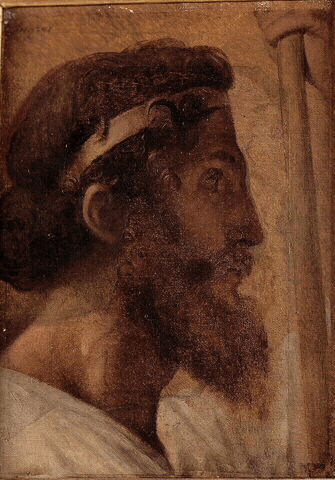
Sloppy and weird, but I kind of like it. A supplement to “The Apiarist”, borrowing from Thucydides via a particular frame.
It was a dark time for Piraeus after the fall of Kol. Even though the oppressors were driven out, they left a vacuum behind, a vacuum filled all too readily by the greedy, the indolent, the tyrannical. Many believed that in time, justice would win out, that the will of the people would once again reassert itself, but in fact, the opposite came to be.
Eventually, a tyrant by the name of Thraseem Stratus seized power, and he was a terror the likes of which Piraeus had never seen. He had the Council of Elders imprisoned or assassinated, stripping the people of their last vestiges of freedom and power. His taxes broke the back of every citizen, from the wealthiest merchant to–far more frequently–the honest laborer. And constantly, his spies skulked through the streets, listening at windows and stalls for words that might condemn–to slavery or death–anyone foolhardy enough to cry foul at this rape of their fair city.
But he had one weakness, and it was his lust that would be his undoing. He took a man, a young winemaker named Modius, as his lover, and though his paranoia ran deep, Modius seemed to escape that suspicion. And Modius did not hate Thraseem, but he saw what had become of Piraeus under his rule and knew it could not continue. One night, Modius and his companion, named Alisto, snuck into Thraseem’s manor and stabbed him to death as he was dining. Sadly, both Modius and Alisto were killed by Thraseem’s guards before they could escape, but their death was the spark that would set Piraeus ablaze. The people rose up, they armed themselves, they imprisoned Thraseem’s guards and spies, and they convened a council of all citizens to ensure that no tyrant would ever grip the fortunes of their city again. This was the new founding of Piraeus, the founding of democracy.
…
But do you believe that shit?
Do you believe that the noble people of this city were so swayed by Modius’ and Alisto’s sacrifice that they just…snapped out of it? After tolerance for two generations of tyrants?
Do you believe that Thraseem was even a tyrant himself? Do you wonder why histories of those years often mention that Thraseem had a brother–do you wonder how Erac Stratus factored into all of this?
Would you believe that Erac Stratus, son of Peren Stratus–who himself ousted the Blood Knights from Piraeus–was ruler of the city, with broad popular support? Would you believe that Thraseem Stratus attempted to steal Modius from his lover, Alisto? Would you believe that the two of them killed Thraseem for the cheap insult he delivered them after he was rejected?
Would you believe that Modius and Alisto were long in their graves when the tyranny of Erac Stratus, distraught after the death of his brother at the hands of those bickering mongrels, was at last inflicted upon Piraeus?
I’m sure you’re wondering why all of this should be hidden. Why should a jilted lover be made into a villain? Why should two weak men, willed to violence over the pettiest of disputes, be built into the heroes that “ushered in democracy”?
You’re asking the wrong question. The real question is: What happened next?
Erac Stratus became a tyrant, yes, but he was not the intolerable yoke that Piraeus could not abide. Not truly. Eventually, tensions rose and his power waned, and circumstances conspired to remove him from power, but it was not Erac or his tyranny whose very memory would poison democracy, would doom this fantasy of self-governance before it escaped its infancy. It was the circumstances. It was the conspiracy.
You see, power in Piraeus has always been a product of alliance, and Erac knew this. He knew which families to compromise, which relationships to dismantle. He knew how to make his tyranny unassailable by the people of Piraeus alone. The force behind the rebellion came from without, from a man banished from Piraeus since the fall of Kol.
Maybe you know who I’m describing. Ezekiel Polyon. The Blood Knight who helped Peren Stratus unify Piraeus under his rule, whom Peren betrayed when he slaughtered all the Kolai remaining in the city during the Dereliction. The one now called Abbott Ezekiel of the Knights Ichneumonous.
Democracy had a goal, of course. It was meant to ensure that never again would a tyrant grip the fortunes of Piraeus and its people. But in order for it to succeed, a truth had to be buried, disavowed. Because if history were recorded plainly, it would be plain to see: Even as Piraeus shouted to the world that it would not be denied its freedom, it sought out the oppression of Kol once again.
 Salt-Powered Investments, LLC