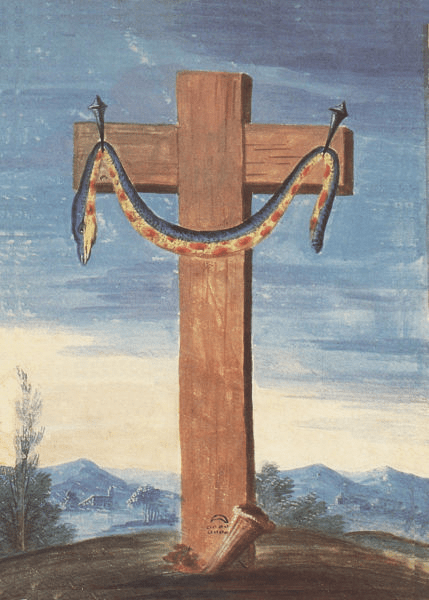
One Wing, One Eye, Chapter 5: Here’s the Plan

Realized it’s been 10 months since the last chapter of this story. Man, time really does fly, fun or no.

There was something that needed to be done.  Devlin felt it, powerfully, desperately.  Except for rescuing Orphelia, he was certain it was the most important task he had ever faced.  And yet, somehow, despite the burning sense of urgency practically holding his eyes open as he rolled fitfully on his bunk in Brill’s infirmary, he had no idea what it was he had to do.

At least he could see now.

Since the Chateau de Marquains, the birds had returned in force.  They were on and around him, rustling, flapping their dirty wings as he choked on the miasma that wafted off them.  They would perch on his bare skin, place their beaks against his eyes and utter a hollow, rattling croak.  It felt like encouragement.  It felt like a threat.  He wasn’t sure to what end.  Their presence still stifled, anxiety like heavy mist.  But unlike before, he could see.  The feathers from their wingbeats fell beside him rather than clouding his vision.  And unlike before, he could move.  Rather than harry and hinder him, it was as if the birds attempted to lift him when he walked.  He felt like he was floating, sometimes, each step not weightless but ineffably light.

He was still worried about Orphelia.  Always worried about Orphelia.  She came home concerned.  Not concerned.  Distressed.  Not home.  Brill’s infirmary–what was home, anymore?  What could home ever be?  None of that was important.  It would all be okay if he could just complete this last task.

Devlin clutched his temples as he felt a wave of pinpricks in a line down the side of his skull.  Slowly, the pain receded. […]  For a moment, the birds were quiet.

Orphelia was safe, though, right?  It wasn’t like Les Marquains could chase her all the way here.  It seemed absurd that he would even want to.

No, Devlin thought, strangely assured of the notion: Les Marquains had no reason to pursue Orphelia.  And the False God would have to be distracted: As they fled, the Saraa Sa’een had burst through the magically-reinforced walls of his chateau.  Was Les Marquains even still alive?  It was a useless question.  It had nothing to do with Orphelia, with determining what it was that found her here.  Whatever it was that scared her.  The birds quietly muttered their approval.  They knew he was right.  They would help him protect Orphelia.  But he would need to get up.  He would need to go out and see what lurked in the Crossroads’ alleys.  No, it was okay, he realized.  The thing that kept him awake, the thing he needed to do: This would be the first step.

The birds fluttered up around him, lifting him from the cot, holding him steady as he crept to the curtain, across the apothecary shop floor.  He lifted the deadbolt and slipped out the front door.

The birds hadn’t yet seen much of this Crossroads, Devlin thought, confined as he had been previously to Brill’s infirmary–and the alley across the street before that.  This little patch of squandered potential sprung up in the ruins of Ulrich’s Bend, itself barely an outpost of the arrogant, long-ruined Kol.  So close to what had once been the Blackwood–now open marsh at the outskirts of the Windwood.  Though one had to admit the Bloodwood was a better name for it.  A name befitting a substrate for the loathsome fungus of human tenacity, never bothered to pull its way upward, yet nigh unstoppable in its stubborn push forward.

Somewhere, secondarily, Devlin wondered how he knew these things, why he made these judgments.  He didn’t remember learning any of it, but it had been some time since he had felt awake.

The streets were empty now, of course.  The inn where Orphelia had been had locked its doors, all of the Crossroads’ late-night wanderers had settled for the night, at the inn, their homes, the posts at the thoroughfare intersections–in the case of the militia volunteers playing the role of night watchmen–and, for those vagrants too poor or too cheap for more sensible lodging, squirreled away in secluded alleys about the town, much as Devlin and Orphelia had been when they first came here.

But despite the quietude, the birds saw things, now that they were awake, now that they were helping.  They fluttered about Captain al’Ver’s boat-wagon, tied outside Brill’s shop.  They dared not land upon it.  It was not theirs.  But this place, this Crossroads, was no one’s.  Between their domains.  It was not her right to meddle here–which was why the birds merely watched–but it was not his either.  Captain al’Ver gave up long ago.  They all did.  Why this sudden regret?

A wave of dissonance washed over Devlin, and the pinpricks in his temples flared again.  Orphelia.  Captain al’Ver was watching Orphelia.  Because of his mistake.  His own poison gift.  The birds croaked menacingly, and somehow Devlin understood the implication: It was upon that observation that he became watched.  And because he understood that connection, he was not afraid when he turned and saw the watcher, seated in the shadows beside the door of the inn.  Beneath a wide-brimmed hat, eyes glinted orange in the light of the brazier down the street.

The old man rested a hand on the stock of a crossbow laid across his lap.  He sat, but he was not inert, the weathered lines on his face showing no trace of fatigue.  The scowl, the stare, the mechanical poise of his fingers–he saw through Devlin, and he judged.  Devlin did not know what to say, but the birds spoke through him:

“I was betrayed first.  What right do you have to intervene in my retribution?”

The corner of the old man’s mouth creased, and his knuckles whitened around the crossbow, but Devlin did not wait for his assent.  He turned and walked away, toward the north end of town.  The nature of Orphelia’s predicament was growing clearer, but there were other winds blowing about this place.  The merchant of bespoke blights–this Marko–he would shortly have designs upon the Homunculus abomination.  How could he not?  But the birds could not guess what those designs would be, so maybe Devlin could find out?

The story the silver man–the abomination, the Homunculus– had told in the infirmary was not alarming to Devlin.  It sounded foreboding, ominous.  The awakening of the Night Sky sounded like a Very Important Change.  Scary, in a far off sort of way–but also exciting?  Hopeful?  Like a promise of eventual relief.  It was a strange way to feel about what Captain al’Ver said would be the end of the world, but Devlin had been in this haze, so tired for so long.  He wanted it to end.  He wanted it all to be what it had been before.  But ending…the sickness, the transience, the sleeping through raspy coughs on boats, in alleys, on infirmary cots–ending that was the first step, right?

The birds’ startled croaks wrenched his thoughts away from that confusion, drawing his gaze upwards.  Devlin’s eye caught Ty Ehsam, perched on the roof of Gene’s smithy.

Rogue, the birds croaked.  Wayward child.  Did the crawling worm not grasp the opportunity before them?

For just a moment, Devlin wondered how it was that the birds’ tittering placed these thoughts into his mind.  As if they were his.

But he had a task he had to complete.  Time was of the essence.  He continued on toward Marko’s.

***

Ty shivered as Devlin looked up suddenly, directly at him, one eye obscured by his ragged hood, the other clearly–almost ethereally–illuminated, piercing, frozen grey in the faint torchlight.  It was by no means alarming that Devlin noticed him, of course.  They had come to town together.  To the extent that the boy had been paying attention, he would have known that Ty was keeping to the rooftops in this general area of town.  Still, the interaction had been uncanny.

“Well, I would say we’ve been clocked.”

The whisper came from Ty’s mouth, but the words were certainly not his, prompted instead by scarcely detectable pulses of mana running through the threads sewn into his head and neck.

“What do you mean?” Ty asked under his breath.  “The boy knew we were here.”

“The boy?” the Dragon replied in Ty’s voice.  “You gods forsaken idiot, you think that what just saw us–and I mean us–was a boy?”

Ty did not respond.  The Dragon’s abuse was more or less a constant when the False God spoke to him, and he saw little point in engaging with it.  He followed Devlin as the boy–or whatever the Dragon thought he was–continued up the street, stumbling and meandering in much the same way he had ever since leaving the Chateau de Marquains.

“I can forgive a simpleton like you for not sensing the mana.  It’s a subtle flavor, and his sister is much, much louder with her magical pollution.  But have you really not noticed the way he hides his hand from al’Ver?”

Ty had not.  He considered it for a moment.

“Is he hiding his ring?” he asked.

“A lovely guess.  It is better to be stupid than stupid and blind, I suppose.  What can you tell me about this ring?”  Ty shrugged.

“Cheap,” he said.  “Looks like dirty iron.  Grooves cut into the flat on one side.  Are those supposed to mean something?”

“It shocks me that you’re even intelligible, let alone literate,” the Dragon sneered.  “Grooves?  Mean ‘something’?  That is a bird’s footprint, you dunce.”

“You say that as if it’s a crest I should know.”

“Only because it is.  That is the crest of the Strange Bird.”

Ty glanced again at the street.  Devlin had disappeared into the shadows, and all was once again silent and empty.

“Never heard of them,” he said, leaning back against Gene’s chimney.  “Another new False God?”

“My disgust can scarcely be vocalized,” came the Dragon’s surprisingly calm reply.  “They’re almost childlike, your priors.  Raised in a world of bad replicas, you are unable to recognize the real thing.  Even when you run right into two of them.  But I suppose the Feathermen disbanded decades before you were born, and why would you have learned their master’s sobriquet?  It was buried on purpose, precisely so that fools like you would forget it.”

“Well, sorry for the foolishness, but I don’t follow,” Ty whispered.  “The ring is magic, I assume?  And it’s linked to this Strange Bird–so what?”

“So she saw us.  And you’re just going to let him dance off to his business in the dead of night?  Get up and follow him, you idiot!”

Ty sighed, carefully creeping to the edge of Gene’s roof.  He leaped over the small alley between the smithy and the potter’s workshop next door, proceeding to make his way after Devlin as stealthily as he could.

“She saw us?” he asked between measured exhalations.  “Who is she, exactly?”

“The Strange Bird,” the Dragon replied.  “The One-Eyed Crow, the Lark in the Burning Tree, et cetera.  And the kid’s been traveling with you all this time: She’s seen everything there is to see about you.  I am more vexed that she saw me.”

Ty frowned, annoyed as much by the Dragon’s vagaries as the thinning of available rooftop routes.  He carefully lowered himself to the street beside a vegetable garden wedged randomly amidst the tradesman’s corridor and took to the street, beginning to push out a field of mana, a subtle, vacuous delusion, the technique Naples called “shadow walking”.

“So what does it mean?” he muttered, quickening his pace as Devlin swayed toward the square up ahead.

“I shan’t waste any more pearls on you,” came the flat reply.  “Find a codex if you’re curious.  Suffice it to say that we should underestimate neither the number of parties interested in our Homunculus, nor their level of interest.  Now keep following the damn boy.  The more I can learn about her angle, the better.”

Ty’s motivation to carry out the Dragon’s reconnaissance was waning, but he really did not like the notion the False God seemed to be reading from the boy’s behavior.  A fourteen-year-old boy being controlled by a mage–let alone one that could intimidate a mass-murderer like the Dragon?  It was just…grim.  Both Devlin and his sister had had a truly rough go of it, and though Ty had his frustrations with Orphelia’s relentless troublemaking, he couldn’t help but pity them.  And he was left to wonder whether the boy’s ring was a problem he might be able to address.  The Dragon didn’t seem to think there was any such opportunity, but Ty was also fairly certain the Dragon didn’t give a damn about the boy’s welfare.

For a moment, Devlin disappeared from view, rounding the corner onto the north square.  Ty lingered there, peering out at the surprisingly well-lit space.  To his surprise, Devlin had stopped scarcely fifteen feet beyond the turn, staring straight ahead.  The benches, fountain, and walkways at the center of the square fell well within the torchlight, but Ty couldn’t make out anything there that might have given Devlin pause.  He noticed it only because Devlin’s attention prompted him to keep looking, but there, under an awning at the opposite end of the square, Ty caught movement.  Smoke.  No–vapor.

The shadows behind the trail of steam stood and approached the boy.

“Devlin?” Bleeding Wolf rumbled, stepping into the light, pensively balancing a steaming wooden cup between his fingers.  “What are you doing out at this hour?”

“Uhm…”

Ty could not understand Devlin’s response, barely a murmur as the boy swayed, hands balled up inside his sleeves.  Apparently, Bleeding Wolf didn’t catch it either.  The concern on the beastman’s face deepened.

“Let’s get you back to Brill’s.  Maybe they’ll have somethin’ for the sleepwalkin’.”

Ty ducked quickly back around the corner, into an alley where he used a barrel as a makeshift step ladder back to the rooftops.  He waited there for the next few minutes as Bleeding Wolf ushered Devlin past, back to bed, seemingly oblivious to the eldritch presence Ty had seen behind the boy’s eyes only moments ago.

“Did you see it?” the Dragon whispered once the two were out of sight.  “He hid the ring from the beastman as well.  Al’Ver is obvious, but why would she consider your ‘Bleeding Wolf’ a threat?”  Ty paused.

“A threat to what?” he asked.

“Finally.  A pertinent question.  Alas, the boy retreated, so I don’t imagine we can be sure.  Still, he was approaching…Marko’s office, was he not?”

***

“Here’s the plan,” Marko announced to his empty theater, no-nonsense, motivational-like, the type of confidence that ought to inject some energy into his thinking.  Except he didn’t have the plan.  He sighed, grumbling a half-hearted string of curses.

The pieces, then.  Atra wanted to fight the Blaze, for whatever shell-forsaken reason.  The Blaze wanted the Keystone.  Unclear if he wanted the construct.  He would if he weren’t an idiot, but…  And the construct, this “Monk”, wants to…bring the Blaze to the site of the Night Sky’s awakening?  What?

Marko glanced out at the torchlit shadows beyond the stage where he stood.  He fiddled with his crossbow, concerned that he might not be alone but self aware enough to know that he was always thus concerned, that there was no signal whatsoever in his worry.  He jumped down from the stage, landing hard, his knees just no flexing with the impact the way they used to, and he checked his wards and traps:

The unobtrusive strip of strange metal at the doorway–the same metal as one of the seven rings he wore–which dissuaded anyone from entering without his approval, still in place and undamaged, unlike the rest of his doorframe; the elongated stone brazier at the edge of the stage–a creation of Holme’s Sculptor–which burned without fuel and grew much brighter in the presence of violent intent, still alight with its normal, orange hue; the windows, all completely ordinarily shuttered but affixed with small parchment tags fastening the shutters to the sill such that they would tear if a window were opened–and which would instantly reduce the temperature in the vicinity dangerously below freezing upon tearing; and, of course, the trap door beneath the rug on the stage, locked both conventionally and with a magical device operated by his pendant which would, by default, redirect any harm done to the device, the door, or the room beneath it back at whoever was attempting to smash their way in.  Everything was still in place, in working order, and crucially, only Marko knew how it all worked.

Back in the old days, it was once every couple years a scav would try him.  Now no one had bothered him in a decade, excepting the Ben Gan Shui’s centipedal envoy smashing through his door the other week.  But he tried not to let that affect his paranoia.  This was a dangerous fuckin’ line of work, and being on the backlines of the scav trade really wasn’t any safer.  His little stronghold wasn’t impregnable, though even the envoy probably wouldn’t have made it past the lock–and none of this shit seemed to work on Lan al’Ver, but it was still better protected than the vast majority of scav marks.

Marko heaved himself back onto the stage, his checks, his thrice-daily ritual completed.  The pieces again: 

If Monk wanted to get someplace else and bring the Blaze there, that gave Atra her stupid battlefield, right?  So she could get herself killed, the Blaze would get his Keystone, and the threat to the Crossroads would be gone.  With the threat–and Atra–gone, the militia would go, and Marko could find some means to wrench his mercantile autonomy back from the mayor.

What about that loose end, then?  Mayor Bergen probably wouldn’t care about Monk’s prophecy, and who knew how much he cared about Atra’s death wish?  He would probably want to ship Monk and Ehsam up north.  Marko had to admit the simplicity was appealing, but Atra would certainly meddle.  In the end, he neither trusted her, nor was he willing to put his neck on the line to give the mayor an unmitigated win–the mayor was his enemy too, after all.

“Here’s the plan,” he said again.  “We got the research angle, see if I can dig up any scraps of wisdom I might’ve picked up from the Alchemist’s fanboys over the last few decades.  Need to figure out where Monk needs to go.  Hell, maybe the clockwork piece of shit will help me.

“Then the action.  Gotta–”  He stopped cold as the stone brazier flared up.

It was for just an instant that the flames sputtered higher, just a quick flash of light that brushed the dark corners of the stage before dying back to dim candlelight.  Could’ve been a fluke.  Something outside, whatever malice woke it up either phantom or just gone now.  Or maybe Atra’s little spy tripped one of his wires.

“Don’t fuckin’ worry,” Marko muttered.  “You’ll be in on it.  Now fuck off.”

It was the truth, sort of.  If everything worked out, Atra would get what she wanted, far away from here, at maximal cost to the Bergen boy’s stupid militia.  But she couldn’t know in advance.  He needed her to react hastily, to be taken by surprise.  He needed to be driving this cart.

But whether or not his invective had been received, there was, of course, no response.

Living the Dream

In spite/because of my vaguely barren posting schedule, I did want to wish all of you a happy new year (and belated holidays, whichever you celebrate), with the exception of the decidedly persistent scammer who keeps emailing me from Nigeria with an AI-generated profile pic and email pitch. My holiday message for you is more complex:

  • I do not want to purchase access to your botnet, no matter how many fake reviews it will generate for me.
  • I am perfectly capable of Googling the various generically American names you have emailed me under (and finding thereof that no one with that name is in this line of work).
  • Your messages are now routing to my spam folder. Please move on. If you are given to self-reflection, please consider a career in which you commit less fraud.

For everyone else, despite appearances, my December has actually been rather productive, and once I figure out how to collate my output, it will start appearing here again (I had a professional engagement that ate up most of my October/November). I hope you all have been well, and I will see you soon, under a new calendrical quantum.

Ferrik’s Journal

Day 1

Starting a first officer’s log in case something goes wrong with our pay and this needs to go to a magistrate.  I’ve signed onto this contract with fourteen acquaintances and one confused vagabond for one Edward of Corino, known as “Edward the Pirate”, recently returned to Piraeus after a decade of exile.  His reputation is poor and well-known, hence this log, but the crew was paid an advance of 10 silver a head on total wages of two Verduan marks per man.  Frankly far more than a month of our time is worth.  The men believe Edward has a rich sponsor for the voyage, but if he does, he’s kept quiet about it.

Issues with his reputation–and his exile–stem from a smuggling deal gone bad.  He was carrying contraband to Verdua and failed to deliver payment back to the praetor who hired him.  He says Verdua confiscated the goods, but who knows.  Things with Verdua have been tense for years.  About as long as he was exiled.  The old timers doubt it’s a coincidence.

***

Day 7

One week in, no sign of this “god of the seas”, but the Captain isn’t agitated yet.  He keeps quiet, though.  No sense among the crew of whether this is according to plan or not.  The vagabond tagging along is an odd bird.  His name is also Edward, which is damned confusing.  Surprisingly competent sailor, but he says he’s never been to sea.  Apparently he’s been wandering the Riverlands teaching children arithmetic for soup.  Crew have taken to calling him “Teach” to keep the Edwards straight.

***

Day 10

There’s a growing sense of unease with our course.  Nothing of our quarry still, but I’m more concerned that we’ve been sailing due west, way off any route any of us have ever taken.  Captain ain’t showing us the charts, and the main worry now is we might be lost.  What’s more, at sunrise, it feels like we can see land on the eastern horizon, which is obviously impossible.

Teach’s interest in this job clearly has nothing to do with the pay.  He’s an amateur mage, which is divisive, since the old and new timers have their superstitions both ways about that, but he also has this almost childlike interest in stories about gods.  Says he has this friend in the Bloodwood with some harebrained historical theories he’s trying to learn more about , and the job is a lead, I guess.  

I assume the Captain knows.  I wouldn’t have allowed it, though.  Magic is whatever.  Ulterior motives are the real bad luck.

***

Day 17

The crew was already on edge finding nothing, but now we’ve found something, and it certainly isn’t a “god”.  We’ve come upon a drift of things that look a little like jellyfish, but they also seem to dart about intermittently in a way that jellyfish never would.  We can’t seem to touch them with oars or nets.  They just avoid them.  The sea is full of weird shit, though, so this wouldn’t be so notable if not for the air around this shoal.  It’s thick, like you’re breathing vapor, chilly even though the sun’s out, and it smells like rot, like a fish market abandoned for a week.

The men don’t like it.  Captain says put the sails down, we’re drifting with this stuff for the night.  I might need to talk someone out of a mutiny.

Teach seems excited.  Not sure whether that’s a good or bad sign.

***

Something is wrong with me.  I can’t be seeing this.

***

Day 18

When I awoke today the sea was different.  Fuck, the whole world was different.  The sky’s gone dark, but it isn’t just the clouds.  It’s like the light that makes it through them is shining through fluid, like that fish mist we’re breathing is actually the sea, and we’re submerged.  And above us, just hanging there–mostly in the distance, though one got close enough we could see it was at least three times the size of a warship–are these jellyfish.  They look kind of like jellyfish anyway–they aren’t.  Still not sure they are even really there.  They look like reflections on rippling water, but you can’t tell what they’re reflecting.  And the reflection unravels at the end and streams off into these branching string-tentacles.

One of the ones in the distance seemed to get sucked into the darkness before our eyes.  None of us realized what we were seeing until hours later.

The surface of the water has grown cloudy, almost silvery, and it’s become like slime.  The creatures from before are still there, but there are more of them, and they’re more varied.  A times, they seem to rise up above the surface and just swim in the air, but it might be a trick of the light.  When it’s quiet, it almost sounds like they’re humming.  We can touch them now, too.  One of the crew picked one up and just sort of lost track of where he was.  He just stared off as the thing slipped out of his fingers, and it was minutes before he came to again.

In the distance, it’s hard to distinguish where the horizon is, what’s sea and what’s sky.  At one point we saw the whole fucking sky move, a shadow the size of a city just slip down beneath the slime.  We were too afraid to speak for nearly an hour, everyone except the Captain and Teach fucking pissing themselves.

***

The lookout says a shadow just passed underneath us.

***

Day 21.  We’re back in the real world.  We met god, and there is an angel with us.

I cannot tell how much is true and how much is just Teach’s speculation, but he believes that we just sailed up against was the end of the world, where everything unravels into the void.  And the vast creature that surfaced beside us–that is a god, I now see.  Teach describes it as “glaucus”, a term I’m not familiar with, but it’s caught on with the crew.  Glaucus shall be the name of the god who reigns at the end of the world.

The angel who we call the Endling, the strange, eight-legged child we pulled from Glaucus’ flesh has its own mystique.  It does not speak, at least not in any way we can understand, but as Teach observed–and I am inclined to agree–it seems intelligent.  Far more intelligent than a creature of the sea ought to be.

Unfortunately, we lost one sailor in the process of recovering the Endling.  Anton touched the appendage where the Endling clung.  As soon as he did, we saw him reel back as if stung.  All we could do was watch as he mouthed words without sound, and his body grew translucent before decomposing into slime that just…wafted into the air.

A lesson for me as a not especially religious man: It is no small thing to touch a god and survive.

***

Day 24

We have made port in Piraeus nearly a week ahead of schedule.  To think that Teach’s supposed “end of the world” was so close to the city, and no one knew of it.  I wonder why it’s remained secret for so long?

The crew has been paid, a development which moots the original purpose of this log–though I now believe myself to be chronicling something more important–but the way the payment was delivered has made me damned curious.  Upon disembarking, the crew was greeted by a man named Thrasymachus, representing the Blue Ring Cooperative, who handed each of us a purse with our full wage.  It seems there was something to the rumors of a sponsor after all.  

The Captain has asked Teach and me to accompany him to present the Endling to his benefactor.  I had no reason to refuse, but besides: How could I?  I believe I am now tied to the Endling.  I helped to bring this messenger of god to Piraeus.  It is my responsibility to ensure its message–whatever it may be–is delivered.

***

Edward’s sponsor, the head of this “Blue Ring Cooperative”, is no more than a child–a girl, barely of marriageable age!  I am unfamiliar with her persona–this “Halia of Thazan”–but she seems to be taking pains to disguise herself.  She wears a heavy cloak, darkened lenses over her eyes, speaks with this strange, affected accent that still sounds vaguely Verduan.  She’s hiding almost everything, and I don’t trust her.

She seemed happy with the Endling, though.  She and Edward are going to present it to the Council of Praetors.  The want the city’s support in investigating the opportunity on their borders.  I hid my rage well, but the fury has been difficult to suppress in the hours since the meeting.

Glaucus is no opportunity.  And the Endling is no sample to be dissected!

Their appointment is in three days.  I must rescue the Endling from their grasp before then.  I think Teach may be sympathetic.  Perhaps I can persuade him to help me.  We have found something sacred.  The last thing we should do is present it to the politicians for defilement.

***

I have spoken with several of the crew now, and it seems even having been in Glaucus’ presence is having a lingering effect.  All of them are dazed, have barely eaten since we last spoke.  Some are saying that they dream of floating through the sky as great Glaucus swims below them, and they awake to find their skin translucent like Anton’s.  They say it soon recongealed, but one showed me his foot.  It now appears more mollusc than human.

I seem to have been affected much less, though I am also finding my daydreams to have a stickiness to them, as if I am drifting into that inter-zone reality at the end of the world.  My thoughts linger on the god, and it is as if the whole world grows moist, but once I shake myself alert, moments pass before the slime dries from the walls, before the people around me cease to waver as wraiths.

Growing more concerned, as much for our wellbeing as for Halia’s plans for the Endling, I tracked Teach down at the tea house on the south side of the city.  He was having symptoms similar to mine, but he’d already put together an idea of what was going on, magically.  He told me the human body normally exudes mana, but whatever happened to us has caused that mana to start degrading into something less stable.  Unlike regular mana, he says, this “proto” mana seems to do some amount of magic by itself, changing bodies, warping reality, pulling us onto reality’s exterior, that inter-zone that exists everywhere, not merely at the end of the world.

Teach thinks that the reason my symptoms are milder than the crew’s is because I too have some latent magical ability, and I’m reflexively resisting the proto mana’s attempts to change me.  He shares my concern for the rest of the crew but also agrees that we must rescue the Endling immediately.  He thinks that the council is incapable of any decision but foolishness with respect to Glaucus.  I suspect he does not share my reverence.  I may ultimately need to save the Endling from him as well, but for now he is a much-needed ally.

***

The Endling is safe!  It was a poorly hidden operation, and I have certainly invited the Blue Ring girl’s wrath, but as I have seen no sign of cooperation from the city guard in their search for me, I can only conclude that Edward and Halia’s meeting was a failure.  The Captain’s efforts were noble–if misguided, I now understand–and it is a shame they must end in ignominy, but perhaps he too will soon share in the future I intend to build.

Teach, unfortunately, was wounded in our flight.  I had expected the Captain to be armed–I did not expect Halia to be carrying a crossbow under her cloak.  I think he made it to safety, but I cannot be sure as yet.  

After losing my pursuit in the Hospitality Quarter, I doubled all the way back south to the tea house where I had met with Edward.  It is dilapidated and undistricted and limited to the oddest and cheapest of clientele.  I rented a room there, and I doubt any but Teach will find me.  

Most fortunate, though, perhaps even divine recompense: The Endling has spoken to me.  He knows my name and desires that I gather the rest of the crew that brought him here.

***

Teach has found us, and alas, he could not be convinced of the providence fallen upon us and our city.  He was alarmed at the spirit that now animates me–as if I had any choice but to make myself an implement of the divine will before me.  He was frightened of the Endling, who has grown to the size of a man since Teach last saw him.  It is natural to quake before the miraculous, but Teach is slow to be persuaded.

I should have struck him down there as the Endling suggested.  I hesitated.  I still hope Teach will come around, but I admit that hope isn’t pragmatic.  No doubt he will defect now, and we will have to contend with Halia’s enforcers.  With any luck, though, we will be beyond any reasonable possibility of enforcement.

In the two weeks we have been hiding, the Endling has shared with me unthinkable secrets.  Most miraculous among them is that those of the crew who could not control Glaucus’ gifts have found themselves Sent into a state of strange apotheosis.  Their minds waver–if they remain at all–but the Blood of Glaucus runs through their veins in diluted form, seeping from their skin and mouths.  The Blood is new life.  Injected into one’s blood, it remakes them, strips away their shames, mistakes, failures, and ignoble predilections.  It builds them anew, as they were meant to be, supplanting their flaws with a new need for the Blood, for Glaucus’ blessing.  With the Endling’s guidance, I have been gathering it.  And I have been bringing it to those of Piraeus who need a star upon which to orient themselves.

We have a flock of almost twenty now.  Many are still sick, all are learning their new place in the world.  Amusingly, the two most dependable among them are children: two orphan boys named Alaric and Badger.  But we are growing.  Soon, all of Piraeus will understand what we are before Glaucus.

***

Badger has let me know that a “delegation” is on its way to our makeshift church.  Hali and her mercenarios, with two in tow who sound like they must be the Edwards.  Our congregation is still sickly.  It is unlikely that we could overpower them, but the Endling assures me I need not fear.  His Song, combined with our voices, will surely hold off any threat of force within our sanctum.  But he also intends to offer them something.

It is improbable that the Blood from the crew would appeal to Halia or her men–though perhaps Edward’s shame bears scouring at this juncture–but even she must have regrets.  

The Endling has shared with me that the Blood is, in fact, named poetically.  It is actually Glaucus’ venom, in this case a flawed and weakened copy, but even an image of the divine is potent, of course.  But while my fellow crew was touched merely with Glaucus’ presence, the Endling had attached himself to Glaucus’ flesh.  Within his body is a much purer form of the Blood, capable of dissolving even those regrets buttressed by privilege and ambition.  The allure is incredible, and I even I struggle to hold myself back from the serum the Endling has prepared.

***

The methods of divinity are…more twisted than I anticipated.  Our congregation is shattered, the Endling is injured, our blessed crew have been consumed.  I don’t understand how we did not foresee this.

As the Endling predicted, the Song effectively stalemated the confrontation, allowing us to make our peace offering of the Endling’s serum.  Edward accepted it reticently, and upon injection, he faded quickly into the inter-zone, where he remained, unresponsive.  I worried that this would be an unwelcome warning to Halia, but she all but seized the next syringe.

I do not know how, but it seems as if she understood its function even better than the Endling.  The serum transformed her into a horrific, billowing monster.  She turned upon us, engulfing our congregation, liquefying their flesh and drinking them.  Were it not for Teach, she might have swallowed all of us.

My memory of Teach’s reaction is the haziest.  I distinctly remember him accepting the serum and injecting it.  He was…dimly resigned.  As if this end was inevitable.  But my memory of him throwing the full syringe aside and leaping to Alaric’s and Badger’s defense is equally clear.  Ultimately, the handful of us who survived, including the Endling–who now bears multiple wounds from Halia’s molluscoid barbs–owe it to Teach’s sudden and fierce resistance.

Halia escaped into the harbor.  Teach left, seemingly disgusted.  The Endling is recuperating in the inter-zone, and he has advised that I take the faithful into hiding.  It seems that our nascent temple will need to remain a cult awhile longer, though the thought fills me with despair.

The Endling is vexed but not enraged.  He says it is fitting–though he says it reluctantly–that the compass rose should have more than one direction.  I wish I understood what he means.

Journey to the Center of Society, Possible Prologue: Trade Offer

“It’s weird how few people pay attention to how many religions are essentially contractual.”

-samzdat

It was an artfully complex transaction.

The opening was typical of the diplomatic speculation that pervaded China’s Warlord Era.  So many sides, so little to agree on–supremacy is an inherently zero-sum prize and all that.

The context: Cao Kun of the Zhili had beaten back the Fengtian and consolidated power over Beijing.  Wu Peifu, Cao’s right hand, was thus mired, from the administrative discomfort of his temporary office in the capital, in the effort of helping him keep it.  This meeting was one of many seeds cast, little investments with little expectation but–Wu hoped–incredible potential.  Cao had already secured the blessing of interests from the Western nations that would soon agglomerate into “Britannia”, but today’s talk promised a more bespoke advantage.  A private citizen with an interesting personal history.  Perhaps a charismatic figurehead, a cunning informant, a diplomatic shield if it came to it.  Wu had little idea of what this man wanted, but that was not unusual.  These meetings were, by their nature, exploratory.

At this point, the prospective exchange was simple: a little of my attention for a little of yours.

He entered Wu’s office with a small retinue: a manservant and a bodyguard, putatively, themselves flanked by eight of Wu’s own soldiers.  Wu gathered that the manservant would be interpreting when the unassuming man spoke first, in accented but otherwise inoffensive Mandarin:

“Thank you for meeting with us, General.”

This was in incorrect apprehension, but Wu did not yet have reason to realize it.

The man, Richard Sterling, a Western celebrity of whom even Wu was aware, had a surprisingly direct proposal: He and Wu had a mutual interest in the eradication of the Fengtian to the north, and he claimed to have the means to execute this goal bloodlessly.  But to do this, he needed two things: He needed men and materiél to bring him close to the enemy’s seat of power unscathed, and more peculiarly, he required that a more subtle operation be completed first.

There was a soldier, he explained, under the command of the Fengtian general Feng Zongchang, known as “Tianyi”.  Tianyi was to be captured, deprogrammed, and extracted from China without Sterling’s involvement.  Wu was, of course, aware of Tianyi–the name, along with numerous revolting accounts of his crimes–had spread through the provinces bordering Manchuria.  His capture would not be a trivial task, but that didn’t much matter.  Wu’s part in the transaction had ended nearly thirty minutes prior.

It was strange, in hindsight, that all of these negotiations had proceeded–between Sterling’s English and Wu’s Mandarin–without any further need for an interpreter.  Strange for Wu, that is, but not for the meeting’s singular outside observer.

For Em, Architect of Exchange, aware by nature of every passed coin, every promissory note, every clicking bead on even the most abstractly conceptual abacus, this context had become quite common of late among the planet’s most valuable transactions.  A little of my attention for a little of yours.  No one realized that all the King in Yellow needed was your attention.  After that, he had all of you.

What was beautiful about this transaction, though, was that what was nominally being asked of Wu Peifu by the King in Yellow was in fact being asked of the King in Yellow by Dick Sterling.  It was beautiful for its intricacy.  It was beautiful for its mystery: Why would one of the King’s agents ask another agent for a favor he cannot refuse?  Why would the King grant a personal request from his thrall so clearly at odds with his agenda?  And most delightfully maddening: Why would the King expend these resources to keep Tianyi–to keep Lamont Sterling–deliberately out of his control?

Em had learned a great deal of the gods of his existence, his own creators, gods that admittedly played dice but who made up for it with a command of mathematics that seemed impenetrable–even to the economy.  He had learned more of them even than the other Architects, he was sure, which would be an unpleasant surprise for See eventually.

But the devils–the Elder–were new.  Deities much more like the ones humans fantasized.  Deities who wanted worship, even in this petty, token sense, because that’s what this was, this bargain between Dick Sterling and the King in Yellow.  Because when a god exists, worship is a transaction.  

And so it was there, in that office in Beijing, that Em first caught a glimpse of that black mirror in which, he realized, he was the reflection.

The Fables #722

“The Fables” is a weekly hybrid social commentary/investigative journalism column in the Sunday edition of the Times of New Chthon, by Abraham E. Sopp

It’s not really a world of gods anymore.

Listen, folks.  Given the ontological weirdness of our whole metropolitan identity, I think it’s actually healthy for us to take a step back once in a while to reconsider why we’re here.  What it all means, living–actually living: not sold out to the mines in Asphodel; not taking the Lethe out to retirement in the ‘burbs; actually living–in New Chthon.

It’s no secret: This here is Hadestown, land of the dead, even if it isn’t totally clear if we are dead.  But it’s not a world of gods anymore.  In fact, none of this would be possible if it was.

You might wonder how that’s possible, and brother, I’m with you.  I’m no Socrates.  I’m just a poor Salukis fan hoping for another Championship win while my fingers can still type.  I’m not gonna act like the metaphysics of it all adds up.  But still: Every once in a while, I have an experience that reminds me that it’s actually important that we’re here, that this isn’t just Hades’ underworld that we’re only living in.  

This time, that experience was the recent scandal (and subsequent administrative shakeup) at Erebus Corp with which I was either fortunate or unfortunate enough to be closely involved.  As it happens, the sordid saga of Al Wyland’s research division at Erebus is a doozy, and while I promise to keep the editorializing light, this column is, at the end of the day, my editorial, a point which took my editor some convincing to relinquish.

Unfortunately, she still wouldn’t compromise on the format.  The saga’s a long one, friends, and while you, my readers, are a dedicated bunch, I was informed that I would not be allowed to command an entire special issue of the Times for this story alone.  You’ll need to settle for a serial.  But I promise: The real story will knock your socks off, and the tepid little statement the Gazette printed this last week doesn’t even begin to cover it.  You can ignore that corporate mouthpiece rag–the real story is here, and you’d best stay tuned.

For now, though, I’ll leave you at the beginning: an expansion survey out in Tartarus, a down-on-his-luck columnist on a ridealong in search of a story, and a lost god at rock bottom, in the worst possible place at a suspiciously bad time.

The Rose, the Cross, and the Sword, Ch. 2 – Flamel’s Cross

Legally distinct, as all things should be.

“Mademoiselle?  Mademoiselle!  A few questions if you will.”

The visibly beleaguered notary struggled to project himself over the stacked books and parchments that, if he’d had his composure, might have lent his too-tall desk an imposing air, an aura of respect befitting his station in the Parisian community.  But in this instance, with his client distracted, positioned such that she could–if bothered–simply look at the desk rather than up into it, the notary had to admit that he probably appeared more like a goblin.

“Mademoiselle!” he rasped, a regrettable bit of scorn entering his voice.  He was normally much better about his tone with women, but he was behind schedule.  He had needed to intervene with the morning’s trouble with the fireplace, and the afternoon had been a nonstop stream of unorthodox contract requests from the sort of clients he had a distinct sense might be hiding something.  And this Italian woman, dressed in gender-inappropriate academic regalia, gliding into his office at the very close of business, was very certainly one of them.

“Mademoiselle!” he redoubled, finally prompting a slight, aloof incline of his client’s head.  “The collateral arrangement you’ve requested–I’ll need more documentation of these Florentine holdings than–”

“Monsieur Flamel,” the woman said, still not quite turning to face him.  “This symbol you have carved into the moulding here–do you know its origin?”

“I’m sorry?  What?”

“This symbol.”  Her French was passable, though heavily accented.  “The cross and serpent.  I believe it is occultic, Monsieur.”

She turned, blank-faced, not presenting any clear intent from the otherwise rather threatening question.  The woman was not ugly, though her hook nose and mud-brown hair rendered her looks middling by Parisian convention, but otherwise she seemed to sidestep all of his available stereotypes.  She was well-past marriageable age, though she had arrived at his office with no chaperone, by all accounts very far from her purported holdings in Florence.  She was likely not of noble blood–proof of one’s pedigree was usually the first thing established when an aristocrat requested the notary’s services, and she had provided no such documentation.  Or even a claim, for that matter.  Whether she was of noble means, though, was the question.

Again, she was very far from home.  She must have secured her transport somehow–the notary could scarcely imagine a solitary scholar making the journey all the way from Florence unscathed, much less a solitary woman.  But the name she had given–Alighieri–meant nothing to him, and her claim to lands in Florence–to funding, as it all pertained to their business–was unsupported.  And she seemed more interested in his office’s walls than her own contractual viability?  The notary found his bewilderment and irritation increasing in equal measure.

“Mademoiselle.  Your property in Florence is unfit as collateral for your purchase,” he blustered, catching himself in time to qualify: “Without additional dated documentation, of course.”

“Oh, nevermind all of that.  I assume gold will suffice as collateral?”  

“Um…gold?”

“Two standard ingots and a purse of unmarked medallions, yes.”

“But that would be sufficient to buy the property outright!”

“Oh.”  The woman frowned.  “Well then, please write the contract to reflect that as payment, if you think Monsieur Menard would accept.”

The notary’s head spun.

“In any case,” the woman continued absentmindedly.  “In any case…sorry, how long will the contract take to complete?”

“Um.  Three days, most likely,” the notary replied at a mutter.  What was going on?  That amount of gold thrown about without a second thought at the purchase of a house on Mortelier Street?  This was palatial wealth, and this woman wanted to live on Mortelier Street?

“That will suffice.  Now, your moulding–I think this is alchemical.  Is it not?  Are you an alchemist?”

“Mademoiselle!”  The notary channeled all the outrage he could muster in his offput state.  “I am an ecrivain, a notary, a respectable citizen!  And you have come to my office to accuse me of witchcraft?”

The woman blinked, pausing to think, as if a simple rewording might resolve the issue.

“I don’t suppose it would be better to say I am accusing your walls?” she asked.

***

Her choice of words could have been more careful, Dante admitted, proceeding away from Flamel’s office at a brisk walk.  She had seen the symbol and gotten excited, and how was she to know that the implications of alchemy in Paris were so…macabre?  One might have thought the Church’s taboos against alchemy would have had more force in Florence, closer to Rome as it were–there it was generally regarded as mere eccentricity.  But apparently there was more geographic variation in the Church’s influence than she realized.

The conversation had aborted such that Dante was not sure whether Flamel would proceed with her purchase contract or not, which was inconvenient but maybe just as well?  The gold which she had volunteered as comparatively unscrutinized collateral was only 20% real.  The ingots were genuine, but the coins were just iron that she had plated with a leaf-thin veneer from shaving off the ingots.  Were it to be exchanged as tender for purchase, it might well be used, and somewhere along the ensuing chain of commerce, it was very likely to catch up with her.  If she’d had her wits about her, she would have waved off Flamel’s comment as to its worth, but she was out of her depth here and struggling to manage the details of her stay in Paris.  She’d gotten separated from her manservant back in Milan, and now, given the Black Guelphs had almost certainly seized her property in Florence, all she provably had to her name was a purse of mixed forged and legitimate currency, those two gold ingots, some parchment, ink, and a small collection of personal effects she had been able to carry in her pack out of Italy.  For now, she would need to stretch her real money a bit further at the inn.

The meeting with Flamel would perhaps prove not to have been a waste, though.  In the shouting match that ensued following Dante’s inquiry into the notary’s architecture, Flamel did provide the indignant defense that his building had been sold to him by an aristocrat with peculiar aesthetic tastes, a “Comte St. Germain”.  Flamel was, of course, unhelpful in providing the Count’s current whereabouts and proceeded quickly to a firm request that Dante get the hell out of his office, but she was holding onto hope that this Count St. Germain was still close at hand and–God willing–and alchemist, as his decor suggested.  

Dante did not come to Paris prepared to act like an aristocrat.  While she was an accomplished poet, that wouldn’t pay for bread.  And while she was a mediocre physician, she doubted the French would suffer a foreign woman to minister to them, skill aside.  If she could join some sort of venture with another alchemist, though…  In her experience, siblings in the Great Work tended to protect their own–and some could even be persuaded to look past their misogyny in the process.

Asking after that name would be tomorrow’s work, though.  Now it was getting dark, and she was starting to notice glances, piqued interest from dirty faces in muck-crusted alleyways that she hoped was merely larcenous.  She drew from her robes the crudely-sketched map she had made from the innkeeper’s directions to Flamel’s office and attempted to retrace her steps.  The cross street in front of her must have been just down the way, extended from the left edge of her drawing.  If she could just get a few streets north, then–she glanced up as something stepped between her and the light of the streetlamp she’d been reading by.

Ah, rats.

“Where ya tryin’ to get to, miss?” a rough voice rumbled from the shadow before her.

“You aren’t lost, are ya?” from behind, a few paces.

Dante raised a hand, both to encourage a pause and to dim the backlight so she could make out her prospective assailant.  Grubby, thick, crosseyed, black teeth, slightly taller than her–he was hunched over, but so was she–and no doubt quite a bit stronger.  He was an obvious cutthroat, of the variety common to every city in Europe, a brainless pair of idle hands with few scruples as to the misfortune of whomever might wander into his cesspool after sunset.  Dante assumed the one behind her was identical, since the first was already identical to all the rest she’d ever seen.

“Excusez-moi, gentlemen,” she said, rummaging in her robe’s inside pocket for a small folio.  “I assume you’re looking for money, yes?”

“Oh, we’ll accept it,” the ruffian said, smiling greasily, taking a step forward.  “For services rendered.”  What a disgusting way of putting it.

There.  She found the folio, pulled it out, flipped it open–which thankfully slowed the hoodlum’s approach, his piggish face scrunching with misplaced curiosity–and quickly paged through the stack of cut-down parchment squares within.

“Would you say Paris’ soil is more sandy or silty?” she asked, pausing with a square between two fingers.

“Huh?  The fuck are you yappin’ about?” the second ruffian muttered.  He’d grown closer, which was nervewracking but also convenient.  Dante glanced down at the parchment, embellished with an annotated geometric array emphasizing a graduating angular progression of circumscribed triangles.  She wasn’t sure it mattered.  The array was meant to search, a feature she’d built in to make up for the fact that her geologic measurements tended to be shoddy and low-precision.  She drew the parchment from the stack and, as carefully as she dared, dropped it, trying to angle its descent as close to straight down as possible.  It fluttered, landing about three feet away, a troublesome lunge.

“Oh, apologies, I’m so very clumsy!”  She tried to ham up the useless damsel persona, a role she really did not care for.  She often felt useless, of course, but she–true to her father’s delusions–also could not help but bristle against damselhood.  She shuffled over to where the parchment fell, which didn’t much give her an angle to run but did coincidentally–and fortuitously–put both thugs on the same side of her.  Trying to conceal her excitement–as well as the nervousness at how fucked she would be if this didn’t work–she knelt, reached out, and placed her fingertips on the parchment’s array.

The sensation was immediate, as if a muscle in her mind locked into place, did not merely wait for her to direct it, but rather leeched her intent from context, from her conscious and unconscious thoughts.  There was a notion of red flowing from her; the parchment erupted with white light; and the air grew cold.  This was literal, in fact: The ambient energy of the surrounding atmosphere, the fire of the streetlamp, body heat from Dante, the thugs, the unfortunate tomcat wandering past the mouth of the alley nearby were all being channeled into vibrations of increasing frequency that her alchemy was directing into the street below.  They were powerful vibrations, and when they found resonance with the cobbles and loam, Dante would–via the same transmutative array–delicately pry apart the stones beneath the thugs’ feet, causing the street to collapse beneath them.

In practice, the array locked in on resonance far faster than Danted anticipated, and the street, in apparently poor repair and built over sewer or other unexpected subterranean hollowing, collapsed instantly and explosively with a shrapnel spray of gravel and mud that flung Dante backward, almost fully across the street.

“Hrm,” she grunted quizzically, climbing unsteadily to her feet.  The dust was clearing.  By the light of the next streetlamp down the way, she could see the jagged hole before the alley opposite her and the unmoving arm protruding upward from it.  Fortunately, she also could not see any curious faces in the nearby windows, and she had yet to feel that telltale sense of being watched.

A sensible Florentine woman would have taken this opportunity to run, to put distance between herself and what had become a rather serious act of public vandalism–and likely murder.  But a sensible Florentine woman would never have found herself here in the first place.  She would never have taken up the serious study of medicine, of geometry, of the natural laws, or of the considerably less natural ones of alchemy.  She certainly would not have bought into the ambition foisted upon her that she would be the one to lead her family into a new era of prosperity and nobility, against the grain of her usurer father’s soured reputation.  And she never would have led a schismatic faction of anti-papists in an attempt to secure Florentine independence from Rome, earning her exile and condemnation to death should she ever return.  A sensible Florentine woman would have ebbed and flowed with the tides of that madness, probably, Dante assumed.  And she would never have developed this strange fascination she had found for death.

She crept toward the pit she had made, careful not to approach the arm too quickly, lest it still had that annoying capacity to grasp, and she allowed herself a little grin as she saw the carnage:

One of the thugs had apparently been buried completely, with no part of him still visible.  The other, the one whose arm now reached ineffectually for freedom from his chthonic end, still had the better part of his face exposed, a shelf of cobbles embedded into the side of it, leaving little doubt that he was quite dead.  It was beautiful, Dante thought, fighting the urge to sketch it on the back of one of her transmutation cards.  Absentmindedly, she picked up the remaining torn half of the parchment she’d used to create the pit and stuffed it in her robe.  This was just a terrible accident, she thought.  Rather: She hoped the guards would conclude.  There was no witchcraft involved.

But in truth she could scarcely remove her gaze from the thug’s deathmask.  The vision was intensely cathartic, and the salience of alchemy in the course of the man’s end seemed to burn in her brain.  This creature was Hell now, a notion of which she was certain, though which her relationship with the Church made electrically complex.  Her alchemy had opened the gates of Hell and pulled this man inside.  In a world of petty politics, the imprisonments of gender, of failure after failure to break out and rise, was this not a reminder that she still wielded the power of God Himself?  And was that not reason for hope?

Top image: Emblematic imagery in alchemical manuscripts – Flamel, Bibliotheque Nationale, 18th c.

Praise for $20,000 Under the Sea

This is a little bit of a thank you and a little bit of an ad heads-up, but while my own efforts to promote $20,000 Under the Sea have been proceeding anemically, the book has received some positive critical reception that I’m grateful for. I wanted to highlight some of it:

  • Self-Publishing Review: “An exceptional high-stakes drama on the high seas that brims with encroaching horror, $20,000 Under the Sea by Sam Locrian is a timely historical commentary and a masterclass in psychological suspense”
  • Indie Reader: “a fun, action-packed addition to the corpus of transformative works in the Lovecraft mythos”
  • The Hemlock Journal: “a mix of thrill and fantasy”

Thank you to these reviewers as well as others who have taken the time to read and review the book.

Additionally, this last month, I was able to have my first in-person event in quite awhile. Thank you to PH Coffee, my favorite writing spot in the Kansas City area, for hosting me for a book signing on August 9th! For others in the Kansas City area, perhaps I will see you at a future event!

Top Image: The Mask

The Rose, the Cross, and the Sword Ch.1 – The Christian

Something completely unrelated. I don’t know if I’ll post the rest (or even finish it), but I’ve always found the best cure for writer’s block is to write something else.

Events have unfolded such that it is now clear to me that I must be very precise in my accounting.  The world is changed now, very literally, perhaps quite irrevocably, and I am as yet the only man who has realized it.  This, then, is my statement of the events which I believe accomplished this cataclysm, though the possibility remains that I will never truly understand the precise mechanisms my apprentice employed.

The signs portend a pivotal role for the cult of Jesus of Nazareth–and my faith in those signs has only grown–so it is with respect to their organization that I date my first interaction with the man who would become my apprentice at the start of the planting season 33 years after their Messiah’s death.

***

“Great Sage of Hermes, I seek your wisdom.  It is said that you guard the secret of immortality, that you have gazed upon the same sky as Enoch, fifteen centuries ago.”

The man was young, by my guess no more than 30 years of age, unadorned clothes, hair that had been washed in preparation for this audience but likely no other time in the past month.  Ribbons of burn scar striped peculiarly across his face, though not in the manner of any brand I had ever seen.  His duplicitousness was that naive, guileless kind: no malice, but a quite foolish assumption that his provenance could possibly be immaterial to a seeker of truth.  As if one could expect to read constellations in the absence of stars.

“I do,” I replied, pacing before the great cylix at the center of my temple.  “And I have.  But that which is guarded is kept from the outside.”

“Of course, Great Sage.  It is not immortality which I seek–but the truth.  That which binds the world together–fastens the material to the divine.”

I blinked.

“You are more educated than you appear, both to be pondering these notions as well as to know that I could teach them to you.  But why?  What would you do with the truth?”

“Is not understanding its own reward?”

“I do not believe so,” I replied.  “No, I believe it is best taken as a means of doing miracles.  But I also believe you have your own opinions on miracles.  And truth–or at least its fungibility.”

The man’s face fell like spent wax, though he did not recoil the way exposed charlatans often do.

“You know of me, then?” he asked.  I turned to regard the glyphs lining the cylix’s interior, as I often did.

“This temple is not a cloister, and your arrival in Athribis has not been silent,” I said.  “The villagers have their opinions of who you are and what you flee.  I make no claim that your true motives have been revealed to me.  Merely that those you have revealed are false.”

The man vacillated over his secrets a moment, steeling himself.

“I seek to understand a particular miracle,” he said.

“Why?”

“Because I fear it.  And I wish either to find peace or undo it.”

It was my turn to consider the unexpected.

“What miracle is it that a Christian would see undone?” I asked, my tone betraying more than a measure of confusion.  The man took a breath.

“I have been brought back to life,” he said.  “I died.  My soul existed in the beyond for three days before the Christ returned it to my body, and then I was alive again.”

“But…”

“And I have not aged since.”

“Hm.”  I had turned.  This Christian had my full attention now.  I had dealt with his kind, amicably but unproductively.  The greatest threat their teachings posed was the possibility I might listen–an audience which might bring Rome’s attention to my village.  Their communion was irrelevant to my contemplation of the Harmony or my role as a physician, and most left when they realized I would be no ally to their movement.  This one was a very different dilemma.  He was most likely a liar, but his lie was a strange one for a Christian, and his wish–to die, plainly–was stranger still.

“It seems to me,” I began, “that the unraveling of this miracle would bring about your end.  At least, if what you have told me is true.”

“Yes, that is my intent.”

“I trust you’ve tried more direct methods to bring this about?”  I did not actually trust this was the case, but it seemed the easiest way to determine if he would be a waste of my time.

“I have.”

I could not help but raise an eyebrow.

“Oh?  And?”

“I shall demonstrate to you and only you, if you will consent, Great Sage.”

***

I had assumed to this point that I was facing a con, though the goal of such a deception remained a mystery.  The temple of Thrice-Blessed Hermes which I kept had few riches, and all of them could be purchased at market for a modest sum, even in a village as small as Athribis.  I had begun to regard the Christian’s entreaties as a test of my wits, a game whose prize was the unraveling of just what this man wanted.  His commitment, though, surprised me.  What I thought was a flaw in his fiction brought our shared inquiry directly to the prospect of his imminent death.  But he did not back down.

He allowed me to bind his hands and feet so that I could sacrifice him to the glory of my god–a practice which I, in truth, had never actually attempted, though I adapted an older funeral ritual to the task.  But I here rely on an amended recollection of the results, for when I first attempted to cut his throat, I instead, assured I had already completed the task, began to loose the bonds on his wrists.  It was only when he asked what I was doing that I realized that not only had I quite forgotten to kill him, but my entire memory of the event had been altered.  At first I reasonably attributed my mistake to a weakness of my own faculties, but as I began recording my intentions for the Christian’s demise in writing, it became clear that I was only a part of what seemed a vast network of happenstance and coincidence dedicated to the strangely singular goal that this man should not die or, for that matter, suffer any severe injury.

Torches would spontaneously extinguish, tools would go missing, my own train of thought would become insufferably hard to grasp as I concentrated on this theoretically simple task.  The closest I came to success, I sneezed at the instant I brought my old ritual knife to his neck, accidentally striking the stone table and shattering the blade.  At this, I was forced to face the notion that an order had been constructed about this Christian that, despite its evasion of my senses, had the consequential force of stone.  The manner of its function particularly intrigued me: I had long thought the Christians just another whirlwind of plebeian pseudo-objections to Roman occupation.  But if the force which protected this man was indeed the work of Jesus of Nazareth, it meant the would-be Messiah not only understood the Harmony of the Spheres; he had found a way to command it of which even I was unaware.

“I truly hoped you would succeed,” the Christian said, as I stepped away from the table.

“Remarkable,” I breathed, not even processing his disappointment.

“Indeed.”  He offered his wrists, which I untied.

“You have convinced me that you are indeed protected by a miracle.  I am afraid I cannot simply explain its nature, but if you would aid me, I would attempt to decode it.”

“Decode it, Great Sage?” the Christian asked, looking up from the partially untied rope around his ankles.

“Tell me, Christian: What do you know of geometry?”

***

The man, it seemed, had a mind for connections, influence.  He quickly grasped the profundity of mathematics that most dismissed as mere useful praxis, but his actual education proved rather arid, dotted with oases of things he had picked up from some of Christ’s more learned followers.  For what I judged to be the most significant subject of study my order had encountered in centuries, I needed a partner, a counterbalance to my insights, so when I determined that the gaps in his mystic knowledge would require more than just remedial instruction, I proposed to take him on as an apprentice.  My first in decades and–not to get ahead of myself–the only one who would not prove a disappointment, intellectually.

His training was expedited, just five years, shorter than my own by more than half, and in that time we did not even touch upon the mystery of his apparent immortality.  Before we could interrogate this divinity, I needed him to understand the language of the divine.  In effect, I needed him to be a translator: This working, allegedly by Christ, was a product of insights wholly illegible to me.  The Christians’ teachings seemed meant for the poor, the beaten down.  They seemed political, and I had only so much interest in the organization of the polis.  Still, I knew to look for the truth within truths.  Plato also modeled the soul as a city; baser political instincts have always served as a lead toward deeper truth.  Thus I needed my apprentice to speak my language, so I could speak his–so I could begin to chart the divine soul beneath Christ’s Kingdom of Heaven.

Up to now, my contribution to my order’s work had centered upon a particular epistemological point: Why should it be that we, creatures of fire and flux, each uncertain step, mishearing, and misapprehension, have any access to Truth at all?  How could we hear the Harmony of the Spheres?  More importantly, how could we possibly be sure it was actually True?

I was not the first to express skepticism of my own faculties for knowledge, nor, most assuredly, would I be the last, but my attempt to resolve the ambiguity was to collapse the Meno Paradox: “That which is above is like that which is below,” I wrote.  “And that which is below is like that which is above, to do thy miracles of one only thing.”  The inner circle is like–and is thus connected to–the outer circle.  If the Truth is unknowable, then the self is unknowable.  But if the self is knowable, then the Truth is knowable, for we are connected to the divine.  I was certain that my apprentice’s condition was the product of this connection, but my theory was that his particular connection to the Truth was different, enhanced, of a higher fidelity.  In imprecise but appealingly comprehensible vernacular: I believed his soul had been recreated of better material.

In search of the method of reforging, so to speak, we attacked the corpus of Christ’s teachings, subjecting them to all manner of mathematical, geometrical, and philosophical analysis.  We threaded our way through the curiously complex web of translational ambiguity created by the propagation of those teachings in Hebrew, Aramaic, Greek, Egyptian, and even Latin.  We found numerous insights that would no doubt have given the ancients pause, would certainly guide future inquiries into the nature of the material world, but what we could not find was any hint, any notion as to how Jesus of Nazareth had been able to manipulate not just the material world but, for the case of my apprentice, the link between the material and metaphysical.  Despite all of our efforts, all of our research, analysis, and experimentation, neither of us could fathom how one could alter the laws of material existence.

We proceeded in this effort for the better part of twenty years, in which time the weight of old age began gradually to overtake me while, true to his original premise, my apprentice did not seem to age a day.  And though he was, in real terms, my senior–and more ironically, though he was determinedly seeking his own death–he still fell into that sort of grief that afflicts the young far worse than their nearby, dying elders.

It was at first only an occasional day that my weakness or sickness forestalled my contribution to the Work, but as those days became more and more frequent, my apprentice began delving into solitary, increasingly esoteric, and sometimes violent lines of inquiry.  I suspected that a boundary had been crossed when he stumbled into my bedchamber one evening, clearly addled–by substance, lack of sleep, or some other adrenal frenzy.

“The covenant was not sealed until Longinus spilled His divine blood,” he said.  His voice was barely a whisper, but his diction was strangely perfect.  “The cross links the Platonic heaven to the earth, yes, but the serpent may not be fixed to the sky without…”  He trailed off, searching the room, before his gaze slowly homed to me.  His mouth hung open.  His lips were cracked.

“Without a Rose,” he said.

This was the first of many incidents in which I would find him amidst increasingly nonsensical ramblings.  He grew difficult to collaborate with, and then he grew difficult to reason with, even on my good days.  And of course, my health continued to deteriorate.  It reached a point that I could scarcely rise from bed, and I was growing certain that my remaining time would be measured in weeks if not days.  As my inquiries with my apprentice had consumed my time and efforts, I had never trained another to take up the duties of the temple, and I worried that the recent changes to his demeanor boded poorly for his willingness to take up my mantle.  Even so, I rose one day and attempted to find him, in hope that he would take sympathy and help me complete the duty to which I had been truant.

By that time, he had taken to carrying out his research in a cave at the base of the hill that abutted the temple.  It was close to the garden and offered convenient access to certain herbal reagents, though I strongly suspected he used the space for privacy moreso.  In my condition, even walking the short distance there was laborious, but slowly, carefully, I managed.

I was surprised to find the entrance of the cave covered in thatch, with a piece of papyrus fastened to the exterior.  It read:

“I have found the answer.  I have made of myself a bridge to God, and all humanity will be made gods in turn.

Touch the circle, and will see the Truth.”

Painfully, I hurried to lift one side of the thatch and stumbled inside.  At the end of the short path to the cave’s single chamber, I found a scene far more gruesome than any my lifetime of mystical inquiry might have prepared me for.

In the circular, lamplit space, my apprentice had erected a cross, stretching from the floor to the ceiling–which had somehow been scoured and flattened, parallel to the floor.  On both surfaces, bafflingly complex geometric arrays had been inscribed, incorporating symbols of Greek, Egyptian, and Judaic origin, along with markings I had never seen before.  Along the perimeter of the lower circle was inscribed an incantation in Latin which I haltingly translate here:

“Divine power made me

Highest wisdom and primal love

Before me were no things created

Except eternal ones

And I endure eternal”

This was mirrored on the ceiling by a language I had never seen before and which I had never seen and which I now believe had not, to that point, ever been written on earth before.  But the most evocative feature of the arrays were the two serpents: The lower circle was bisected by a depiction of a snake, stretching from east to west.  The upper circle held within in the Ouroboros.  This was it, I realized–the fastening of the serpent to the sky.

The centerpiece of the apparatus I describe last not because it was in any way less salient than the previous components but because I now perceive it to be, in a sense, resultant from these components:

My apprentice had nailed himself shirtless to the cross at his angles and left wrist.  His right hand, now draped over the other arm of the cross, still clutched a knife, which I gathered he had recently plunged into his chest.  But the blood which should have soaked him, his knife, the cross, and the ground beneath his mortal wound had taken on strange and disturbing properties.  All of it had become solid, with a rough, translucent, crystalline surface, stretching improbable arcs between the base of the cross and the knife and converging at his heart.  I realized belatedly that these streams of frozen blood, pulsing as if with a heartbeat, resembled the thorny stems of roses, and indeed the scarlet bloom at his chest did seem to radiate like petals of a macabre flower.  It would have been a horrible state in which to find my apprentice dead, but he was not dead.  His eyes were open wide, fixed on the distance but intermittently twitching and blinking, and his ribs heaved with wheezing breath.  I cried out to him.  He did not answer.

I moved to help him, but my first step forward made contact with the perimeter of the lower circle, and the very last things I beheld with my own mortal eyes were the sanguine glow which filled the chamber–and the beatific smile which spread across my apprentice’s face.

Top Image: Holes

Sin (from The Chimera)

Another strange piece, part of the same weird project as Maze in the Mists. House of Leaves had a lasting influence on me, and there is something just fascinating about the idea of a fictional character delivering a non-fictional analysis of a book that doesn’t exist. The difference here is that the latter will (hopefully) eventually exist. But that’s a far future sort of thing.

And if you enjoy my writing and would like to support it, please considering buying one of my books. It is timely, after all. $20,000 Under the Sea released just this month, and you can buy it in ebook or paperback format here!

Why did Taamir Ra allow himself to be taken by the Dead Queen?  His companions’ reasons shouldn’t be any great mystery: For his brother, it was a desperate, knowingly doomed attempt to repel the darkness which would surely swallow the kingdom.  For Tiresias and–but for an ancient pact–Jabez, it was brazen, stupid curiosity.  For the masked man, it was compelled.  Taamir’s reason should be no great mystery either, but it’s hard to trust you people: It was guilt.

Consider that for a moment.

It’s easy to dismiss many modern representations of guilt as melodrama since so few of you feel guilt anymore.  “The weight of your sins?  Grow up,” says the man with a soul of formaldehyde and jism.  “Quit sulking.”  Think of the last time you allowed yourself to be tormented by your past–for deeds no one would ever discover, that it would be immaterial for them to discover–and, perhaps, despair.  The modern human is tormented by the consequences of their actions, they are tormented by shame, the pain of their true self being seen–the fear that it might be seen–but guilt is wallowing.  An indulgence.

It wasn’t always that way.  Edward Teach calls guilt the synonym of freedom: “You bond yourself to yourself to free yourself from everyone else.”  If you are without guilt, then, what follows?

The lack of guilt is downstream of the hatred and envy which armors you against the terrible responsibility of that world that you–not you, specifically; it is crucial that it was not only you–have built.  You became powerful, only to discover that power does corrupt.  It burns like fire, and charred skin simply makes one pliable.

But unlike you, Taamir Ra still had his soul.  He understood his sin and acted to absolve it.  “But Persephone’s capture was engineered by Bas’ahra and the masked man.  They manipulated him!”

So little wisdom remains among Christians that it’s easy to forget there is a great deal of wisdom to be gleaned from their discarded flesh.  As it were, the Christian god is quite clear on this particular sin: Eve manipulated Adam–Adam still gets the boot.  He had exactly two jobs to do: Follow the rules, and make sure she follows the rules.  He failed at both.  He did not impress upon her the importance of the task at hand, perhaps because he was too stupid to understand it, and when it came time to make sure she was actually listening, he fell asleep.  The mistakes are boring, prosaic, and kind of pathetic, not the kind of thing you would think ought to cost an eternity of Paradise, but I assure you: The boring, the prosaic, and the pathetic are in fact an extremely dependable foundation for evil.

Taamir Ra should have seen through Bas’ahra’s incredible incentive to defect, he should have spirited Persephone away without telling her; failing that, he should have outwitted the masked man; failing that, he should have refused the Sun Priests’ job and left Khet, because if he were not there, Bas’ahra could not have succeeded in the way she did.  By his very presence, he caused others to do evil successfully.  That is sin, and sin ought to elicit guilt.

Where Adam had little choice but to accept the consequences of his failure, Taamir faced a decision.  His failure caused a child to be buried alive, and his submission to the revenant which disgorged from her tomb ten years later might have atoned–but to what end?  He could have simply run.  Bas’ahra did.

But sin weighs on more than the sinner.  The injustice of Persephone Elea’s death did not go unnoticed.  Divine recompense brought about her return, and Taamir saw that, even if he could not know the particulars of the divinity.  Perhaps he thought his sacrifice–even if it did not sate the Dead Queen–might adjust the karmic scales of Khet just so, might undermine the Queen’s right to the suffering she would inflict upon the city and the world.  It might bring about a responsibility for those who could one day resist.  A responsibility to do so, under pain of guilt.

Hey Babe, New Nautical Catastrophe Just Dropped

IT’S FINALLY HERE!! You can order $20,000 Under the Sea on ebook or paperback here!

In case you’ve been counting, it’s now been almost two full years since I finished the original draft for $20,000 Under the Sea. The journey has been fun-filled and exhausting–and a lot more ultimately went into this book than my previous ones. Thank you to everyone who has been on this journey with me so far. I hope you enjoy!