Edward’s Account of the Dereliction

Historical fiction is great and all, but have you tried fictional history?

You say her name is Anna?  This may be a lark, but…is this Anna Vael we’re talking about?

Godshell.  Then she’s really still alive.  And you don’t have a clue who she is, do you?  Fine, then, I’ll tell you while she listens–yes, I know she’s listening.  Anyone would know that if they just knew who she was.

Anna Vael’s limited fame–or infamy, depending on the side you might have been on in a conflict that ended over a century ago–has to do with the events of the Blood God’s Dereliction, which I think you’ll agree is a poorly-recorded story these days.  Piraeus keeps uncommonly good records, so around here, we at least know that the Dereliction did happen, but it’s worth noting that in the stretch between here and Ulrich’s Bend, most consider the Blood God a myth at this point.  Something to tell the kids.  The type of thing you don’t need to bring economics into–the Blood God disappeared, and his empire crumbled, that’s it.

Of course, in the real world, it doesn’t work like that.  The Blood God disappeared, yeah, but he spent most of his time disappeared for the decades before that anyway.  For the last thirty, forty years of his reign, he made a low-single-digit number of public appearances, all of them spectacular, filled with mass murder.  Putting down rebellions, mostly.  When you add in accounts from much earlier in the Kolai Dominion–recovered from the Blood Knight stronghold here in the city, actually; Peren Stratus made sure the archives were extracted before he burned the place–you get a picture of a Blood God who was interested, to a point, in a particular sort of rule, but very disinterested in personally ruling.  So very early on, he handed the job off to the Magni Kolai.

The Magni were like his high priests, selected meritocratically, but the merits they were selected for–devotion to the Blood God and his philosophies, and absurd, raw, magical talent–mostly didn’t translate to skill in governance.  You probably had one or two that figured out what needed to be done, and they channeled a whole lot of hostile work environment onto the Migni Kolai, their handpicked subordinates who went on to become the Dominion’s central bureaucracy.

This kept the ship sailing for a century or so, but as the Blood God grew less and less engaged, the Magni were left with way less pressure to get any of it done right, which meant that more and more of the Migni positions got filled lazily.  On average, that meant you had folks in there mildly unsuited to keeping an empire running.  As it got worse, it meant that more and more positions in the bureaucracy were filled–as a matter of course–by bribery and nepotism.  Remember: Kol’s anti-corruption measures didn’t have moral norms.  They were, collectively, “if you break it, I’ll turn all of your veins inside out”.  As the guy saying that stopped paying attention, the backroom deals stopped having consequences.  Then it took awhile, but eventually the cracks in the system caught up with them.

When, for example, the city of Cantabyz suffered a plague that decimated their iron output for the better part of a year, a skilled provincial governor might have channeled central resources toward aid to mitigate the economic disruption.  They might have adjusted taxation, pushing that burden into future, less plague-ridden years.  But should the governor not have reacted at all, the city, already impoverished by circumstance, would have been liable to snap when the Dominion’s unadjusted taxes dragged what was left of it into the ground.  So they would rebel–and they did rebel, as it happened.  The Blood God dragged himself out of his temple, put down the rebellion, then went back to bed or whatever.  Except he put down the rebellion by killing everyone involved–along with a really-not-trivial number of bystanders–which meant that the economic impact radiated out to the rest of the Dominion.

Long story short, this all happened a couple of times, in this outlying province or that one, before the economic implications finally crashed into Kol proper, in the form of a famine.  And this time, when the torches and pitchforks crossed that unimaginably foolhardly threshold of marching on the Blood God’s temple and throwing the doors wide…they lucked out.  The bastard was gone.  To this day, no one knows what happened to him, but that’s not the point.  The point is that this was where the games began.  It’s where Anna Vael comes in, in fact.

To clarify, when I say the torches and pitchforks lucked out, I mean their cause–and, again, the bystanders–lucked out.  Those specific idiots all died very quickly, because the Magni were plenty capable of putting down a disorganized riot by themselves.  Still, I don’t want that initial stall to detract from how big a paradigm shift this was.  The Blood God was, not mincing words, a god.  He killed the Dead Queen of Khet.  There literally is no entity–not even a collective entity–that I am confident could stand against him.  That’s a more nuanced qualification than I would like to make, but the point is: Overthrowing him was straight-up impossible.  Overthrowing the Magni Kolai, on the other hand, was merely difficult.

At this point, I’ll add that the number of sources on the record declines precipitously.  There were lots of corroborating sources for the rebellion at Cantabyz, the famine, the storming of the temple, but from then on, the only account that’s survived to today is by our friend, the Abbot Ezekiel Polyon, who, as you are well aware, may or may not currently have command of a stable nervous system.  That said, he did keep regular journals up to a point, and those have since been copied extensively.

In any case, Polygon describes Anna Vael as one of the central players of the Dereliction.  Prior to the riot that reached the Blood God’s temple, she was an underworld fixer of sorts, some mix of information dealer, mercenary, and assassin, earning her bread on whatever skulduggery the Migni let happen within their walls.  Pretty sharp–she’d have to be for the ensuing events to be true–and apparently notable for her appearance.  Her body was, he says, infested with flies–to the point where he was not sure whether she was carrying the insects with her or if, somehow, she was the flies, and the body was merely a vessel.  

In any case, in the leadup to the big riot, the Migni must’ve seen the writing on the wall.  They realized that if the Blood God got involved, it might not have been on their terms, so they raised a militia to keep the peace and recalled a selection of the Blood Knights–Polyon included–to lead it.

Solid short term plan, yeah?  The problem is that militias are rickety things, lots of competing priorities and loyalties, cracks that will get exploited sooner or later if they don’t get cleaned up into a formally-administrated army.  And despite the militia’s best efforts, the riot did break through to the temple, and the revelation therein meant that keeping the operation running wasn’t discretionary anymore.  

The Kolai tried to recall more Blood Knights, but news traveled faster than their missives.  A number of Kol’s outlying provinces rebelled outright–Piraeus included, and the question of loyalist reinforcements became one of if, not when.  And in the meantime, they were left with this large force of conscripts and mercenaries, poorly paid and extremely sensitive to payment, trying to hold back a tide of suddenly-emboldened insurgent movements with whom they probably shared more in common than their Kolai overlords.

Vael was among those conscripts, and she made herself very useful very quickly by gathering intelligence on the rebel cells, which she provided to the militia, obviously–but also to Polyon and the Migni, who were at this point growing suspicious of the militia’s intermediary leadership.  The commander who bubbled to the top of that mess, a former mercenary named Adrian Martell, was charismatic, clearly ambitious, and beholden to the Kolai solely on the basis of coin.  His loyalties were in sharp doubt, but based on Vael’s surveillance, he was making no imminent moves to consolidate power.  And with micro-rebellions breaking out all across the territory map–vandalism, attacks on tax collectors, mass theft of the Migni’s stockpiled food–replacing him would have been costly indeed.

The balancing act continued for months, as message after message rolled in, sending word of the slaughter of the Blood Knights in Piraeus and elsewhere, all confirming that, ultimately, no reinforcements would be coming.  The Migni’s resources began to run thin.  And then, gradually, they began taking casualties.

Assassination attempts.  Poorly equipped, poorly thought out, by Polyon’s description.  Usually they would fail, but occasionally they would get lucky.  And all of them were fanatics, apparently brainwashed to the edge of sanity, all repeating the same mantra as they were imprisoned, interrogated, tortured to death, what have you:

“Forty hands with forty daggers will find the oppressor’s heart.”

Pretty cold, right?  Wish I’d thought of it.  Well, the Migni started dropping, either from these creepy assassins or just outright desertion.  Then, the Magni started infighting.  There were just nine or ten of them at this point, all wildly-dangerous humanoid death engines, but in their jockeying for power, one of them was killed, one severely injured before Polyon finally found an out for the Dominion.  Vael delivered him a report one day detailing evidence from scores of witnesses that all of the insurgent movements in the city were being coordinated by a “Gutterway Oracle”, who she identified as Karl Hamlin, another militia conscript who had been selling tax collector schedules for favors and coin to anyone who would listen.  And Hamlin, she said, was lying low at that moment at an inn on the outskirts of Kol’s pastoral territories.

Polyon interlaced his account of what followed with so much self-flagellation that it’s frankly hard to parse, but my translation is this: He took this intel to the Magni and gathered a task force comprised of most of the remaining Blood Knights in the city to go hunt down Hamlin.  And as soon as he left Kol, Adrian Martell commanded his troops to slaughter the Magni.

The truth, it turned out, was that Karl Hamlin was nothing but a skilled distraction.  He may, in fact, have been delivering the messages the rebels were coordinating around, but Anna Vael was writing them.  She was collaborating with Martell to ensure the militia always kept a brisk pace just two steps behind.  She was the one who brainwashed the Migni’s assassins, who coordinated the forty hands and forty daggers which bled out the Kolai bureaucracy, primarily to develop and test a method by which the militia might actually kill the Magni.  Her answer was simple enough to be upsetting: snake venom.  It stops blood from coagulating.  Coat arrows and blades with the shit, and now you can make wounds a blood mage can’t easily close.

To Polyon’s credit, he smelled shit way sooner than he should’ve.  He aborted his mission just a few hours after his departure, but he still returned too late.  By his account, he made it to Kol’s central plaza just in time to witness the last Magnia, surrounded by dismembered militiamen, fall dead at Anna Vael’s feet.
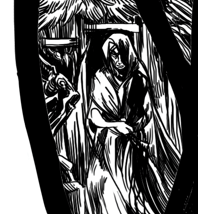
“The Apiarist”, Excerpt 7: Peren Stratus

“Ezekiel Polyon.  I’ve been looking forward to meeting you.  Don’t know if you’ve heard–you have a reputation among the sailors now.”

“The…sailors?”

“The navy.  Ever since we broke the Saltstill Cabal’s blockade two weeks ago.  While we were fending off their reinforcements, somehow the fucking city guard repelled their primary invasion force at the Fisher’s docks and didn’t give a fucking inch.  We got outmaneuvered plain and simple, but we didn’t pay for it, all owing to a Kolai reject who charged a ten-man advance unit with nothing but a spear and a bucket of pitch, killed them all, then set fire to a galleon.  Among what I’m sure are many acts of heroism, of course.”

“Rumors are prone to exaggeration, Lord Stratus.”

“Perhaps, but I personally witnessed some of the carnage you left.  Impressive.  Ironic as well, given the actual Kolai were no damn help at all.”

“You honor me.  I can’t help but assume, though, that Piraeus’ most promising young admiral should have a more pressing cause for this meeting.”

“Most promising, Lord Polyon?  You honor me, though far less deservedly.”

“I am no lord.”

“Oh?  Am I mistaken, then, in my understanding that you are the son of Maria Athene, herself a cousin of Councillor Ekreon Athene?”

“I am not accustomed to masquerading as nobility here.  I am merely the son of an apiarist.”

“An unruly branch, to be sure, but you still possess the right to petition the council.”

“Provided I never avail myself of it.”

“…”

“…”

“Very well, Lord Polyon, I will get to the point.  You have heard the directive by now that the guards and navy both are to root out the remnant smuggling operations the Cabal still has in the city?  And I expect your commander has received additional intelligence regarding regular shipments arriving each week on the southern Fisher’s dock that then disappear into the city tunnels?”

“I have received both of these directives, yes.”

“Would it interest you to know that this second piece of intelligence was delivered by a known agent of Lord Teleos?  It would, wouldn’t it?”

“My interest in such a detail would be a dangerous thing to express, Lord Stratus.  Though if what you say were to be true, it would introduce a battery of additional questions.”

“Then let’s speak plainly.  My aims here are dangerous to express too.  Treasonous, some might say, but I think you’ll be receptive.”

“Receptive…to what?”

“I want to overthrow the council.  Teleos, Athene, Alcyon, all of them.”

“…”

“Come now, Lord Polyon.  I find it hard to believe you wouldn’t be interested.  Or do you not think me–”

“I’m listening, Lord Stratus.  Tell me more about this conversation with Teleos’ agent.”

“The Apiarist”, Excerpt 6: A Thousand Cuts

My training took the better part of six years, in which time I enthusiastically apprehended the skills I would need as a soldier, as a mage, and as a de facto cleric of the Blood God.  I was good.  Far better than my recruiting class, better, even, than many of the Knights in full standing.  But it had turned out that despite these products of my hard work, my most interesting quality to chapterhouse leadership was actually my pedigree.  I was, of course, Piraean, but more uniquely, I was of the noble class–albeit its bourgeois fringe.  

As it was, the fight against the Atheists was angling more and more uphill with each passing year.  The Knights had little difficulty eliminating the radical elements who made themselves visible, but they were having a much more perilous time navigating the invisible gauntlet of small resistances the Atheists placed in their way.  Delayed responses from the Piraean Council, effectively tying the Knights’ hands in civil matters; the ubiquitous threat of petty theft and vandalism that compromised the movement of Blood Knight assets throughout the city; and the occasional assassination of Knights on patrol–retributed fiercely, but not fiercely enough to outweigh the attrition–all combined to ensure that the Knights’ existence in Piraeus remained decidedly hostile.  And where new Atheist aggressors seemed to spring up almost passively, owing to the unrest sowed by the noble families, new Knights…took six years to train.

It was, as the Knight Captain told me in a private meeting two weeks before my knighting ceremony, unsustainable.  Indeed, though I was not a Knight yet myself, I had felt the effects of the Atheists’ resistance keenly.  I had long since lost count of the meals I had skipped due to supply shortages, and just the previous month, Cassandra of Coralta–the Knight who had intervened on my father’s behalf at the city gates over a decade ago–had been killed when a group of Atheist riverwalkers pushed her from a pier in the harbor and held the water around her head until she asphyxiated.  She had been a mentor to me since I enlisted, and the rage that filled me when I heard the news has, to this day, only been equaled once.

It was for this reason especially that I was receptive to the assignment the Captain had for me in that meeting.  We could no longer ignore the Atheists’ inner workings, he said.  In all likelihood, they had an agent, an informant in the chapterhouse, and there was little we could do about it.  We simply could not afford to purge every Piraean from our ranks, and there was little else to go on.  The only sensible course of action was to manufacture a spy of our own.  I had the right characteristics, he said, and there was no one whose loyalty he trusted more.  It was a light blow to my pride that I would not have my knighthood recognized for some time–perhaps for years–but he knighted me there in his office.  Then, following a public and ignominious display of my expulsion from the chapterhouse for “disloyalty and heresy”, I was left on the streets of Piraeus to begin my mission.

Were the Atheists a centralized organization, I have little doubt that my chances of infiltration so soon after my exit from the chapterhouse would have been zero, pageantry or no.  But I knew they were not, and I knew the city guard had reason enough not to be suspicious of a new recruit.

If any faction had suffered worse attrition than the Knights in the Atheists’ protracted rebellion, it was Piraeus’ armed forces.  Since it was of the utmost importance that the Atheists did not establish anything resembling a fighting force, the guards and the navy had permanent places on the Knights’ list of usual suspects for any Atheist activity needing investigation.  Needless to say, damage to their ranks–both collateral and targeted–was substantial, and they were in constant need of new recruits to keep their numbers stable.  I had the martial skills they required, and they certainly did not have the luxury of investigating the unstated suspicions of the Piraean nobility.  They accepted my application without question, and within a few months, my history of allegiance to Piraeus’ “illegal occupiers” had been buried if not forgotten entirely.

“The Apiarist”, Excerpt 5: The Right Side of History

I enlisted with the Blood Knights in the eighty-second year of the Blood God’s reign, when I was twenty years old.  This was somewhat older than most recruits, but my path in life had been dominated by other factors, and I had yet to seize any particular control over it.

The previous year, my father was stricken with a consumptive infection of the lungs and–mercifully, perhaps–passed quickly.  It wasn’t precisely the attack in Piraeus that had brought about his end: His injuries healed mostly, leaving him with a limp and limited function in his right eye.  But it had, in hindsight, been the beginning of a downward slide.

He, of course, did not return to the city from then on, for the very reasonable desire not to become a martyr or scapegoat to either side in the thinly-veiled conflict now ongoing between the Knights and Piraeus’ self-determinative Atheist faction.  But I suspected it was also deeper than that, a phobic unwillingness to face even the place, much less the people, which had subjected him to that trauma.  The result was that he was confined to our home and grounds, occupied by not busy, increasingly present and irritable to Mother, the servants, and myself.  That he was moving so much less than he had been, that even his limited mobility in that limited space was painful for him–it all meant that even before the infection set in, he had become little more than a cruel, vaporous reminder of his former self.  I found it striking that when he died, not even Mother truly mourned.

The legacy he left, though, was complicated for everyone.  Despite his many enemies, Father was still regarded as one of the most talented artisans in the region.  Our family’s honey fetched an outright exotic price as far away as Kol, and even despite our lifestyle of rural borderline-nobility, the business had been shockingly frugal.  It turned out Father had left behind a fortune in silver, valuable goods, and stock certificates in a number of successful merchant companies, each of which had been paying dividends for years.  The future of the apiary was, of course, uncertain, but it quickly became clear that Mother and I were in no danger of starvation.  What was less clear was whether either of us had any desire to carry on Father’s work.

Eventually we settled on a course.  Our head servant, Giuseppe, the very same servant who had sought help for Father the night of the attack, would take charge of the apiary, and when Mother passed, he would be the one to inherit it.  I, meanwhile, had taken my father’s rejection to heart and fully accepted I would have no future in beekeeping, truly assumed I had no aptitude for it.  And my mind had belatedly wandered to the political unrest in Piraeus, and tectonics of power I now saw shifting around us.  So it was with not insignificant enthusiasm that I renounced my inheritance and made my way to the city, determined to stand on the right side of history.

Despite my ardent opposition, I have little doubt that if the political skirmish I arrived in had taken place even twenty years later, the Atheists would have won handily.  Though the Knights were formidable warriors, anti-Kolai sentiment ran deeply through Piraeus, and they were outnumbered–possibly a hundred to one.  Their advantage was that the Uprising of the 79th was fresh in the collective memory of the Kolai dominion: Only three years earlier, the city of Cantabyz, the source of the majority of the Dominion’s iron, had declared open rebellion against the Magni Kolai.  The Blood God’s arrival at their gates–his first public appearance in a decade–claimed over 10,000 lives.

In the wake of this event, Piraeus’ cooler heads overwhelmingly opted to lie low, leavin the Knights to contend only with the Atheist’s firebrands.  My allegiances were unconflicted.  I had no grievance against the Kolai’s taxes, and the only meddling I had seen from the Knights had been clearly on the side of justice.  It did not matter that when I arrived at the chapterhouse, the squire on duty in the hall urged me to consider that I would very likely not become a Knight without any magical talent I knew about.  And it did not matter that my enthusiasm was met by a bemused chuckle from the only Knight in the hall at the time.  I had existed too long in a state of terror at the unbelonging I had felt from my father, from the apiary, from the indolent, insular people of Piraeus.  I knew that the Blood Knights–even simple service to the Blood Knights–was something greater that I would be glad to be part of.  The Knight Captain’s speculative nod, when it came time to provide him my reason for enlisting, was tepid vindication.  But it was enough.

“The Apiarist”, Excerpt 4: The Blood Knights of Piraeus

My first contact with the Blood Knights was when I was eleven years old.  Against my father’s wishes, I was made to accompany him into the city on a delivery to the Hospitality Quarter, as the servant who normally helped him with those trips had fallen ill.  It was a fraught journey, but I was familiar enough with the work that I no longer roused his anger, so long as I stayed quiet.

Some years later, I would become acquainted with a common template of a man: the type who charmes, who is a socialite to all except those with whom he lives–to them he is a terror.  As that template is well understood by many, I wish to emphasize that my father was very certainly not this type of man.  He was not merely irritable and angry to his family–he was irritable and angry to everyone, and, as I discovered on this trip, these qualities had earned him enemies in Piraeus.

At the gates of the city, we were stopped by a guard who requested, smirking lasciviously, that my father produce his licensure.  Rather than showing documents, my father handed over a large parcel of his goods before continuing through the gates.  He did not offer me any explanation, and I did not ask, but I found the interaction decidedly tense.  And I was not the only one–I distinctly recall the skeptical glance of the woman in armor on the other side of the checkpoint.

As we were finishing our third delivery, that same woman approached us, carrying the parcel Father had given the guard.

“Piraeus has no licensure requirements for apiarists,” she said.  “I guess you knew that, but extortion is also prohibited.  If it happens again, you can let us know at the chapterhouse.”

Father accepted the parcel, eyes down and jaw set with an emotion that seemed perturbed but otherwise lacked definition.  When we passed back through the gates on our way home, the guard we had spoken with was no longer there, and the one who had taken his place fixed us with a look of such hatred that I could not bear to hold his gaze.

I was at the time too young, too sheltered to understand the political implications of what occurred that day, but as my role facilitating Father’s deliveries expanded, the situation grew clearer:

In those days, Piraeus was ruled by a council of elders who nominally commanded the loyalty of the city’s entrenched aristocracy.  It had been this way for as long as most citizens could remember, but where, a century ago, Piraeus had taken pride in being the last stronghold of Riverlander rule unswayed by the machinations of Spar, the city had finally surrendered rather than face ruin at the hands of the Blood God.  Even now, there were many Piraeans who resented this obeisance, who refused to recognize the Blood Knights’ authority to oversee and overrule the city’s various administrative functions.  That the Knights were largely hands-off and demonstrably less corrupt than their local counterparts–a notion for which the incident at the gate was, to me, irrefutable evidence–was beside the point.  Nor did it matter that the Blood Knights in Piraeus were a majority ethnically-Piraean: The Kolai were outsiders, and those that bent the knee were, behind certain doors, traitors.

Of course, when those criticisms emerged publicly, the repercussions were severe.  A month after that first incident, a group of guards, displeased with the Blood Knights intervening on his behalf, ambushed my father in the midst of his deliveries.  They destroyed his goods and beat him so severely that his servant had to fetch me and a separate wagon in order to bring him back home.  And though, to my knowledge, Father never reported the incident, the Knights seemingly discovered the incident on their own.  They massacred the city’s peacekeeping force, assuming their duties for the better part of a year, and the guards’ flayed and exsanguinated corpses were hung from the city walls for months after the altercation.

Father never set foot in Piraeus again.  I never learned whether he had a stance of his own on the Blood Knights’ rule.  He certainly did not seek their aid–I discovered from his ledgers that he had been paying bribes to the guards for over a decade.  But that was a stable arrangement: He was paying for his ill repute among the citizens.  It had nothing to do with the Blood Knights, and it was not by his will that his business became a battleground in their fight over who would control their hive.

“The Apiarist” Excerpt 3: A Lesson on Free Magic

“I do so hate these commencement speeches, but our mission can get so muddled in all the regimens and pageantry and Sacristi; especially out here, so far from Kol…”

It was customary, the Knight Captain had explained, that each new class of recruits receive its first training in Kol’s sacred art from the visiting Magnia that year.  It was a great honor, and exposure to the Magni was otherwise highly limited.  Command of the Blood Knights mixed only tepidly with the ranks of the Migni Kolai, the World City’s administrators and functionaries, and promotion to civilian office from the Blood Knight rank and file was vanishingly rare.  And it was almost unheard of that any of these should join the company of the Magni, the Blood God’s high priests.  Kol’s leaders, for the most part, were born rather than made.  So to be close to a Magnia, to have her attention, was not to be squandered.

Even at the time, though, I was under little illusion as to how practical the instruction would be.  The chapterhouse’s senior squires had already put us through remedial arms training, and I was well familiar with how foundational any introduction to a martial art would have to be.  And of course, we had little time: Magnia Livia was important, and we, plainly, were not.

This impression proved only partially correct.  I did not learn to call the Blood that day–that would be a process of slow growth over decades, as it was for nearly every recruit–but the pith she did dispense was more impactful than all the tutelage I would soon receive from lesser teachers.  She began with a demonstration:

“As I’m sure you all know,” she said, unsheathing a razor, “the armament our God wields is blood, and the strength by which he wields it is violence.”  She cut a deep line from her elbow to her wrist and turned her palm upward.  Solid, sharp tendrils of blood erupted from the wound.  She continued:

“Both violence and blood exist within all of us which is both blah blah blah and blegh blegh blegh…”

Rolling her eyes, she shook her arm, and the writhing tendrils collapsed in a wet cascade, which seeped back up into her arm as she turned to us.

“You will learn how to do that with a lot of practice, and you’ll learn the apologetics and justifications–probably with a bit less practice.  But all of that–the weapons and discipline–is what we use to maintain our strength.  None of it is, by itself, going to tell you what it’s for, and the lot of you are going to be damned miserable excuses for knights if you can’t grasp why the Blood God sent us out here in the first place!

“To that point,” she said, “consider a bit of heresy.”

Once again, she drew her razor from her elbow to her wrist, but this time, instead of a roiling scourge of blood, a blast of flame surged from the wound, engulfing her arm and prompting more than one of us to stagger backward at the sudden wave of heat.  And then, just as suddenly, the flame extinguished, and her flesh knit itself back together.

“The Blood God decreed Free Magic, so we mustn’t forget that the arts of the pyromancer, the Greyskin, the beastman–all are like to ours.  Free Magic means that never again shall a tyrant claim control over the potential that lies within us.  That is the legacy the Blood Knights are meant to protect.  We do not cultivate strength for its own sake, we don’t imitate our God out of vanity, and we certainly don’t become strong so we can bully the weak.  You are protectors, and it will serve you to learn a thing or two about what you aim to protect!”

“The Apiarist” Excerpt 2: Fear of Bees

My father kept bees, and it terrified me.  Perhaps it was some shameful regard I had for him manifesting in how I saw the creatures.  He did not care for me, and he showed me little more than disdain throughout my childhood.  He barely spoke to me, though the harsh glares and the terse dismissals hurt far more keenly than the sting of the switch when he had the servants discipline me for indolence or insolence or whichever transgression he decided must have brought me into the room with him in that moment.  It was my being there, I now understand, which was my true sin.  The wound still aches occasionally.  I still think it cruel that a father should so resent his son’s presence, though I’ve come to understand his reasons better.

In any event, my terror at his diminutive livestock was certainly not empirical.  I never earned their ire, and they never stung me, but I maintain it was quite rational.

“Stay away from the hives,” Mother would warn me when I ventured into the yard while Father was away.  “If you bother them, they will sting you.”
She frequently mentioned the servant who, when I was very young, toppled a hive by accident and perished thereafter in agony.  I worried that if the creatures were as irritable as Father, even catching sight of those ominous, thrumming boxes would put me in danger.  But I know there was something more.  I would encounter lone bees and wasps hovering about the flowers in front of our house, and though I took the same care with these solitary specimens, I felt none of the visceral fear in approaching them that I did in the apiary.  A bee was just a creature to me.  Like me, in a way, with needs and fears and priorities.  But the buzz–the swarm–was something else.  All of those needs, all of those fears, all of those bodies.  It was chaos.  It was too much.

“The Apiarist” Excerpt 1: Magnia Livia

I’ve begun writing a long story/short novella in the Piraeus-headspace (like the Halia and Dreamfish pieces, except way longer and way more tangential), and I’ll be posting the mostly-unedited segments here. Highly unfinished and likely not at all in the order they’ll be for the finished product, but hopefully good reading.

The one who visited the chapterhouse that season was named Livia–Magnia Livia, the Knight Captain enforced, for failure to address the Magni by their proper title was punishable by Sacristi.  She arrived in Piraeus, as was traditional for Kolai dignitaries, in a palanquin suspended on barbed handles carried by chanting acolytes–the Order of the Blades of Kol, temporarily bereft of their deific wielder–steps perfectly synchronized, immaculate, precise control belied by mania stitched in bloodshot eyes.  I remember finding it at once appropriate and deeply unnatural.  I saw in it a reflection of the rules and ritual of the chapterhouse–though perhaps I was merely part of the mirror image–in turn a careful mold to the deliberate equities and geometries of Piraeus itself, though this was an irony I would not realize until much later.  

But in their hymns and mutilations I could sense a current connecting them, focusing them in burning passion toward horrifyingly singular end.  I did not know why the feeling was familiar to me, nor why I found it so perverse, but I was possessed of many misconceptions back then.  So was the Knight Captain, it turned out.

Prior to the Magnia’s arrival, the Knights had sorted us according to their impressions of our magical aptitude, toward vocations of knight, servant, or squire as our capabilities allowed, but even then, in the “Era of Free Magic”, certain forms of mana were repellant enough that cultural awareness of them all but vanished with distance from the World City.  The Blood Knight chapterhouse in Piraeus thus had minimal record of the mana currents that existed in the microsensory networks of swarms, they did not look for those currents in their recruits, and they had little ability to find them even if they were so inclined.  But this was part of the reason the Magni supervised the recruiting process.

I was surprised to find that Magnia Livia showed little regard to the stiff sort of ritual espoused by the Blood God’s other faithful.  Far from the Knight Captain’s stone-faced severity–an attitude I had come to understand as the invariable face of the Kolai–Livia was warm, mirthful, middle-aged and slightly overweight, but effusively energetic.  Upon her first tour of the chapterhouse, she loudly bemoaned the asceticism of the squires’ quarters, the kitchens’ stores of spices, the frequency with which Sacristi was exacted from the servants:

“‘It is not suffering for which we care,’” she said, quoting Kolai scripture.  “Stop this at once, Captain.”

I found it odd at the time that the Knight Captain was willing to suffer such admonishment from a bureaucrat, but I was naive.  I later learned that Livia could have eviscerated him with a gesture were she truly displeased–a prowess I saw for myself in the Dereliction when she slaughtered a militia of over 300 before the Lady of the Flies overwhelmed her.  And it proved I would owe far more of my fate to Livia than the Knight Captain.  It seemed I had potential of which I was unaware, and she recognized it immediately.
“You’ve misjudged these ones,” she remarked to him, patting me and two other would-be squires on the head.  And with that single gesture she altered my destiny.  No longer was I to be a foot soldier to an institution that bound the world by code, by a paradigm of sense to match its chaos.  I was to be a leader of that institution, and I was to discover all the degrees of deeply unsustainable freedom it allowed itself.

One Wing, One Eye, Chapter 4: Unwelcome Participants

“What the fuck is this?” Marko snapped, lifting his hood as he scuttled into Brill’s backroom infirmary.  He started as the Homunculus turned to face him.

“It may be more efficient,” the Homunculus said to Brill in its unnaturally even, unnervingly human tone, “if you were to gather all of the appropriate audience prior to further discussion.  It will save time on repeated explanations.”

Brill shook their head, beckoning Marko closer and stepping past him to draw the curtain that divided the infirmary from the rest of their shop.

“Now was that sarcasm?” they asked.  The Homunculus looked back to them, moving only its head and neck.  While seated, the construct remained almost perfectly still, save for the limited gestures it used to facilitate its stilted communication.

“Monk’s great at sarcasm,” Naples added.  “Gave us some real zingers on the way here.”

“Fucking wh–”

“Your name is ‘Monk’, then?” Brill asked, cutting off Marko’s outburst.

“I was designated the title ‘Homunculus’,” the construct replied.  “You may call me whatever you find serviceable.  This one has elected the moniker ‘Monk’.”

“Quick-witted as ever, Mr. Naples.”

“Isn’t this the guy you threw out of here two weeks ago?” Marko interjected.

“I did, yes,” Brill sighed.  “But when he arrived with my erstwhile charges, themselves safe from what al’Ver concurs as a harrowing journey to the Reach, I thought it perhaps worth our time to entertain some discussion as to how this discovery relates to the Crossroads.  As to why I sent for you, Marko, I trust you can see what is in plain sight?”

“Quit with the fuckin’ riddles and get to the fuckin’…” Marko trailed off as he scanned the room, his eyes focusing on the parting of Monk’s cloak.  “Motherfucker.  That’s the Keystone, ain’t it?”

“Indeed,” Monk confirmed.

“Ah…” Marko exhaled, somehow giving the impression of smiling and scowling at the same time.  “I don’t suppose you also brought Ehsam back with you, Naple man?”

“It’s, um, it’s Naples, thank you.  And no.  Ty Ehsam is–”

“Skulking about somewhere but not dumb enough to show his face, got it.”

Naples frowned momentarily before he realized the expression only served to confirm Marko’s cold read.

“Calm, Mr. Naples,” Brill said, noting the shape curled on the bed in the back of the infirmary, stirring.  “We are not in a position to turn Mr. Ehsam over to the Blaze at present, as much as we all would like to be rid of that threat.  And I imagine Commander Atra might try to sabotage such an exchange, from what Bleeding Wolf has told us of her goals.”

“So…?” Naples prodded.

“So it’s still best he’s in hiding,” Marko said.  “Us knowin’ about him’s the least of your concerns.  That still don’t answer my first question–” he gestured at Monk, “–the fuck are you?”

“Please explain again…Monk,” Brill added.  “The only person left who ought to hear is Bleeding Wolf, and I cannot say when he will be joining us.”

As Monk recounted its purpose–its scenario, the Alchemist’s plan to avert some prophesied end of the world–Brill idly wondered how credulous they ought to be at it all.  Though popular legend made Excelsis out to be a sort of magical genius–and Monk’s presence in their shop was perhaps even proof of that–they one thing they had never heard of magic having any success with was prophecy.  The histories they had read were dotted with accounts of charlatans who attempted to parlay spurious–though difficult to disprove–half-predictions into political influence.  But these histories all culminated in situations where those regimes with supposed access to magical foresight found ruin by pointedly unforeseen circumstances.

The Bloodfish’s rise completely obliterated the Highlord’s unsuspecting hegemony.  All the Sun Priests of Khet could not, apparently, predict the ascendancy of the Dead Queen.  And even the vaunted prophecy said to have fueled the reign of the Iron Queen of Spar–the sourceless and vaguely-worded “magic will destroy the world”–seemed, in the scope of history, to be little more than post-hoc justification for the Right-Hand Diarch’s consolidation of power.

And putting the conceptual issues with prophecy aside , the particulars of this one invited skepticism.  The Night Sky?  The Old Gods?  They weren’t real.  Sure, there was historical evidence of their worship, but people might worship any old thing.  The forces of Harmony believed Matze Matsua was an incarnation of some godlike spirit, but he died like any other man when he was gored by a roach.  Before the War, the followers of Le Marquains reportedly worshipped bulimia.  Hell, Bleeding Wolf still counted himself part of a cult that worshipped the color green!

The shape on the bed had sat upright, and Brill caught Devlin’s face, shaded by the boy’s tattered hood, staring, lidded with exhaustion but nonetheless fascinated by the construct’s locutions.

“And thus it is of paramount importance that the site of the Night Sky’s awakening be located expediently,” Monk concluded.  “It was Captain al’Ver’s belief that we might investigate that question here.  And Brill recommended we consult you, as you have expertise in creations such as myself.”

Brill nodded in agreement.

“What do you make of it, Marko?” they asked.  Marko shrugged, grimacing.

“What do I make of it?  I don’t sell abominations anymore,” he spat.  “Though…I’ve a few clients who–”

“Abomination?!” Naples exclaimed.

“Technical term,” Marko replied, distractedly calculating what Brill could only assume was a sales offer on their guest.  “Any artifact that seems to be alive.  Messy fuckin’ business, but–”

“Regardless, Monk is not for sale!”

“Indeed, Marko,” Brill interjected.  “My query for you was not regarding commerce.”

“Well then what the fuck was it regarding?  I don’t know shit about the Keystone–and I woulda bet you no one’s interest in it was more’n speculative in the first place.  And if you want my opinion on the end of the world story, it’s horseshit.  If the tinker toy here ain’t a commercial opportunity, I can’t fuckin’ fathom why you want my opinion.”

Brill glanced at Monk, but if the construct was alarmed or offended at Marko’s outburst, it did not show it.

“I was hoping, my friend, that you might consider this development from a different angle.”

“Talk straight or I’m leavin’,” Marko growled.  Brill sighed.

“Self-preservation, Marko,” they said.

“Eh?”

“The Blaze’s momentum toward us is being used to justify meddling in your business that you don’t much appreciate, yes?”

Marko held their gaze for a moment before nodding slowly.

“An’ you think that whatever prophetic interaction this thing has prepped can be used as leverage.”

“I have no idea whether such a thing is feasible, of course,” Brill added.  “But if it is, I would consider you best equipped to determine it.  Ideally before Atra does.”

Brill glanced again at Devlin, still staring from afar, half his face concealed by his hood.  The boy seemed different since his return, they realized.  He was still quite ill, of course, but beneath his labored breathing and evident weakness, a sort of grim determination had overcome his catatonia.  Brill could not imagine Devlin held any stake in the intrigue to which he was listening so intently.  They could only wonder where all that determination was aimed.

“So…who is this ‘Atra’, anyway?” Naples asked.  Before anyone could answer, the creak of Brill’s shop door wheezed from beyond the infirmary curtain, along with the sound of voices.  Brill motioned to Naples, who readily intuited the alarm in the gesture.  He quietly escorted Monk to the corner of the infirmary and draped the construct in a bulky canvas sheet.

“Now you must promise to rest, my dear,” came Lan al’Ver’s voice from the next room, followed by the trudge of approaching footsteps.  “Your journey has been arduous, and it is no weakness to admit it!”

“It seems there was no cause for concern after all, Captain…” Atra’s voice was fainter, trailing off as the door creaked shut again.  Then Orphelia drew the infirmary curtain aside, only to freeze as she beheld the veritable crowd within.

“Mr. Marko…” she said.  It was an almost-gasp, as if she lacked the energy to be properly surprised.  Brill noted with some concern that the aura of mischief she’d had in her brief visit to the shop a few hours ago had given way to a demeanor that seemed practically haunted.

Marko looked from her to Brill.

“Gonna go,” he muttered uncomfortably.  

He slipped past Orphelia and made his way out as Brill approached the girl, wary that she seemed somewhat far from alright.  Like Devlin, she seemed different as well.  Older, they decided.  By several years.  They could have sworn that she was a child when they took her in a few weeks ago, but now she seemed nearly old enough to be married.  That could not have been a lapse in attention, they thought.  There had to be something more…complex affecting the girl.

“What’s wrong, Orphelia?” they asked, setting aside their suspicions for now.  She shook her head, looking up at them vacuously.

“Nothing…” she said.  “You aren’t smiling.  And that’s…good.  Probably.”

***

This wasn’t good, Atra thought, reentering the jail.  She stood over the desk, shuffling parchment absentmindedly.  The girl.  Something was not right about the girl.  She could not tell what, and that by itself was perhaps cause for alarm.

Orphelia was indeed a mage, that was certain.  Bleeding Wolf had said as much–though he had deliberately omitted detail–but it was more than that.  Not a concrete observation, not a characteristic Atra could see, but a feeling: like a paranoid delusion that something was just over her shoulder, just out of sight, but only when she was near Orphelia.  That feeling was magic she had never seen before, and she had seen quite a bit.  

Never mind the shock of it, though.  She had researched the deep lore of the Riverlands extensively, and though the complication Orphelia presented was outside her expertise, it was unlikely to be outside her knowledge entirely.

A different angle, then: The girl had been traveling with al’Ver, “retrieved” from the Chateau de Marquains, as he had relayed to Bleeding Wolf.  This meant the girl had made a journey south…a week’s journey to the Reach, a week’s journey back with al’Ver.  The captain had been gone about two weeks, yes.  But so had the girl, according to a conversation Cirque had overheard from Brill.  Had he…chased her down to the Reach?  That was impossible.  No one could elude al’Ver on a river for a whole week.  His “experience” as a boatman aside, the magical forces involved in that proposition made the certainty of him catching her almost categorical.

Which meant he wasn’t chasing her.  He knew she would be at the Reach.  And if he meant to retrieve a teenage girl from the Chateau de Marquains of all places , she had to imagine his hurry would supersede his preference for conventional travel.

Which meant she wasn’t there in the intervening week.  She was merely going to be there at the end of it.

She had left the stream.

And the Chateau de Marquains…the Saraa Sa’een.  Fucking shit.

It was all Atra could do to keep from punching through a corner of the jailer’s desk.  It wasn’t a certainty, no, but if the girl was a locus of the Gyre, it would dwarf every other cause for concern she and Cirque had yet found.  Marko’s scrying attempts, Brill’s political feints, even al’Ver–an incarnate primal storm, albeit one she was pretty sure she could sidestep–all of these were minor distractions compared to the prospect of being warped into the circular story, the Smiling Lie and the Promised Vengeance.  Al’Ver could be convinced to stay out of things.  The Gyre, though, existed almost exclusively to meddle.

Her ears perked up at the telltale sound of skittering in the jail hallway.  Odd.  Cirque was early tonight.  She looked over her shoulder to see him stalk into the room, frustration more apparent than usual on his face.

“Weird stuff going on at the apothecary,” he said.  His tone was quiet but still cuttingly clear.  “Al’Ver came back with a talking construct that’s trying to find the ‘place where the Night Sky will awaken’.  Marko’s trying to use it to keep the mayor away from his toys, and it gets worse.”

“We might be in the Gyre right now,” Atra replied grimly.  Cirque stared at her, his frustration visibly giving way to worry as he slouched back against the wall.

“No shit.”  He paused.  “You sure?  You see the old man or something?”

“No.  Not yet.  But I’m fairly certain there’s a locus in this town.”

“So we might not be in it yet?”

“Right,” she said.  “But I’m not sure we have the luxury of keeping to the background right now.  An’ I hate to run.”  Cirque snarled at nothing in particular.

“Worthless town,” he muttered.  “Rotten scheme.  Can the Gyre be counteracted magically?”

“Hard to say.  Only information we’ve got is that’s ensnared many a powerful mage.  Catherine of Greypass was said to be one of the greatest Blood Knights of Kol.  Jin Gaenyan was supposedly formidable enough to have the Barabadoon on ‘is tail even before he became a monster.  An’ Feathermen records suggest even the bloody Masked Alpha got pulled in before the War.  But there’s ambiguity.”

“Ambiguity?”

“Did they get pulled in?  Or did they enter of their own accord?”

Cirque scowled.

“That’s a greedy fucking question.”

“‘Tis.  But we may never get a chance like this again.  The whole damn horizon’s dyin’, an’ a barren waste just won’t burn.  No fire for me, no feast for ye.”

“I hate this argument.”

“Come now.  Isn’t it exciting there’s a player in this game that might best us?”

“Two,” Cirque spat.  Atra raised an eyebrow.

“Pardon?”

“Two players.  The boy al’Ver brought to town–”

“Not the girl?”

No, not the girl.  The fucking boy.  He reeks of feathers.”

“…feathers?”

“Feathers, you arrogant musclehead.  Like the Feathermen and the Sadist.  Like Ka’s palace.  Like her.”

One Wing, One Eye, Chapter 3: A Restless Homecoming

But this has not yet become a story about the knife.
Three and Two and Two

“Godshell, I–I don’t even know what to say, Dog Boy.  This is beyond the pale.”

“I don’t either, Gene,” Bleeding Wolf muttered, ducking in through the door to the jail.  “It’s why I came here.  To figure the details.  Sort my thoughts.”

“That ain’t what I mean!” Gene retorted, loudly enough to catch Michel’s attention from behind the warden’s desk.

“Evening gentlemen,” he called.  “What brings you, uh, here tonight?”

“Town business,” Bleeding Wolf replied.

“The shell it is, Dog Boy!” Gene interjected.  “There shouldn’t be nothin’ to figure!”

“What sort of business?” Michel asked, frowning.  “Incidentally, Anita and I did want to thank both of you for helping out as much as you have these last few days.  It’s taken a load off both of our backs.”

“Don’t mention it.”  Bleeding Wolf didn’t much care for effusive thanks, but he was happy to help.  “This place is home for me, even if I’m given to spend time away.  Anyway, Gene, if there’s nothing to figure, then who would you fork over to the whitefrocks?”

“No one!  That ain’t our right!”

“That’s neither an option nor your call,” Bleeding Wolf growled.

“Uh, what’s all this then?” Michel asked, taking a nervous step back as the argument reerupted.  Bleeding Wolf raked his claws through the stubble on his face.

“I’m sure word was gonna reach you soon enough,” he said.  “Meetin’ with Holme went…meh.  Sculptor wants a sacrifice in exchange for the Holmite lives lost.”

“But…didn’t they attack you?”

“Yep.  John wants to keep ‘em happy, though.”

“They don’t get to demand our blood if it was their fault!” Gene objected.

“I mean, right,” Michel agreed.  “They shouldn’t…well…”

“Well, what, son?” Gene spat.  Bleeding Wolf put a hand on the old man’s shoulder as Michel frowned, nervous.

“There is the Masson boy,” he said.  “He’s still here.”  Bleeding Wolf raised an eyebrow as Gene’s face fell.

“Masson?” Bleeding Wolf asked.  “What’d he do?”

“Vince Masson,” Michel clarified.  “Young man set fire to his house a few years ago.  His family was inside, and the fire spread too.  Took out a whole district.  Ten or so died, dozens more were hurt.  Kid was sentenced to hang.”

“But he’s still here?” Bleeding Wolf asked.  Michel shrugged.

“Mayor Bergen commuted all death sentences when he was elected.  There was a vocal portion of the town that thought we were going too far, killing a sixteen-year-old.  So Mayor Bergen changed the sentence to jail and mandatory labor.”

“For how long?”

“Rest of his life, which…”  Michel glanced back toward the hallway which housed the jail cells.  “Which isn’t great logistically.  This place wasn’t made to have permanent tenants.  We’ve had to hire temporary jail guards, put him fully in the care of the caravants he’s working for–not totally humane, those contracts.  They treat him like an animal, and he’s come back a few times with serious injuries that Brill has had to treat.  I’ve wondered a few times if it would’ve been kinder to just follow through in the first place.”

“An’ now it’s convenient to flip-flop, John’s doin’ it,” Gene muttered.  It was a fair point.  Though that didn’t mean it was the wrong answer in this instance.

“Politics, indeed,” Bleeding Wolf growled.  He agreed with Michel, for what it was worth.  It sounded like the kid did a bad thing, probably for bad reasons.  If the town wanted to kill him, they were well within their rights, but this “leniency”, the process, the spectacle of it–bigger pieces of shit marched through the Crossroads every day, and the seriousness with which the mayor pretended at justice here felt like a mockery.  It almost did feel kinder to hand the condemned man over to Holme.  Except Bleeding Wolf knew what the Holmites did with their sacrifices, and he suspected Mayor Bergen did not.

“A town meetin’ in the gaol?” came the twisting syllables of Atra’s accent from the doorway.  “I must’ve missed quite the development today.  Michel, here to relieve ye.”

Bleeding Wolf turned to regard the woman sweeping into the room.  He knew that at this point, Commander Atra enjoyed quite a bit of the Crossroads’ respect, and he could see why.  By all outward appearances, she was a reassuring protector.  Even-tempered, muscled, battle scarred, yet still clearly in her prime.  Bleeding Wolf trusted her about as little as it was possible to trust an ally–and less than many enemies.  When they met, he had caught a glimpse of the magical power she was somehow keeping hidden.  He was certain that she had not accumulated that much death from even-tempered protecting, but what she had told him of her goals–forthrightly, honestly, that she wished to meet the Blaze in battle–made no fucking sense.  And he had a feeling that she was dragging the Crossroads into the fire more than she was shielding it.

“Thank you, Commander,” Michel said with a respectful salute.  “Have a good evening, gentlemen–I’m sure that you and the mayor will come to a reasonable solution.”  Bleeding Wolf waved him a halfhearted goodbye and faced Atra.

“What ‘reasonable solution’ are ye debatin’ then?” she asked.

“You want me to believe you don’t already know?” he growled back.  Her calm smile somehow made him feel both remorse for the sudden aggression and even more anger for the accusation’s little visible effect.

“I’m runnin’ a militia here, Bleeding Wolf, not a spy network.”

“And yet.”

Atra shrugged, walking past them to the warden’s desk.  She lifted a piece of parchment with a convincing veneer of assiduousness.

“Mr. Jens spent his 24 hours here,” she muttered.  “Best be lettin’ him out tonight.”  She looked up.  “Yer deliberation’ on whom to send to Holme, then?”

“You have been spyin’!” Gene snapped, almost shouting.  “And we ain’t sendin’ nobody!”

“Well, Bleeding Wolf’s right, and there’s no point hidin’ it: I do keep informed.  But ye’ll forgive me for takin’ a turn at disbelief, seein’ as the decision of whom to send isn’t yers to make.”

Gene’s face slowly reddened as he grasped the meaning of Atra’s roundabout phrase.

“It isn’t mine, either,” she added, lifting a keyring from a hook behind the desk.  “So there’s little warrant for the blame yer bringin’ to me, Gene.”

And yet.  Bleeding Wolf didn’t need to say it again–the thought hung in the air obviously enough without additional vocalization.  He couldn’t tell if his intuition was being clouded by what he had discovered of Atra’s prowess–by how incredibly intimidated he realized he was–but he couldn’t shake the notion that the particulars of the arrangement with Holme were material to her interests.  It was obvious that she would want an arrangement with the Sculptor’s military, of course, but what made no sense–and yet seemed inexplicably evident–was that an offering of one of the Crossroads’ own to those horrifying statues was exactly how she wanted it to go down.

If she was concerned by Bleeding Wolf’s anxious calculus, though, Atra did not show it.  She simply returned his pensive glare with a pleasant smile and left the room, proceeding down the jail hallway, keyring jingling as she walked.

“I’m startin’ to get damned tired of everyone tellin’ me my opinion don’t matter,” Gene muttered quietly.  Bleeding Wolf listened as the metallic jingle receded to the far end of the hallway.

“It’s a distraction to think of it as an insult, Gene,” he replied in a similarly low voice, though he doubted there was anything they could do to prevent Atra from eavesdropping at this range–even Bleeding Wolf’s magic was capable of augmenting his hearing enough to catch isolated whispers fifty feet away.  “If you look at the big picture right now, you’ll notice that no one’s opinion matters that much.  I don’t know if you realize how much political fuckery it takes to engineer a situation that everyone disagrees with but no one can gainsay.”

Gene raised an eyebrow, evidently rattled, though he didn’t have time to respond.

“Gentlemen!” a voice boomed as the jail door slammed violently open.  “I have need to interject upon your arrangement with Holme!”  Bleeding Wolf whirled, annoyed at what was becoming a stream of interruptions, as Lan al’Ver glided through the doorway, brandishing his umbrella like a showman.

“Where the hell have you been?” Bleeding Wolf spat.

“The Chateau de Marquains, Mr. Wolf, retrieving our dear Orphelia and more–”

What?!

“Pay attention!  You are to travel to Holme, and we shall join your caravan.”  Bleeding Wolf blinked.

“To…Holme?” he asked, winded.

“Indeed,” al’Ver continued dismissively.  “To secure the iron you promised the Doctor’s ward.  Have you forgotten your own priorities in this crisis?”

“Crisis?  How do you…?” Bleeding Wolf sputtered.  He shook himself, rapidly reacclimating to al’Ver’s infuriating gift for putting him off balance.  “We aren’t going to Holme!”  Al’Ver rolled his eyes.

“Of course you are,” he said.  “There is no one here you trust to take charge of that exchange.  You will be going there, and as momentous events await beyond that bend, I will be accompanying you.”  There was a moment of silence.

“Did you say Orphelia was at the Chateau de Marquains?” Gene finally asked.

“Now yer to go straight home.  No stops at the tavern–ye worried yer family bad with this last stunt, so don’t ye go worryin’ them more.”  Atra’s voice preceded her entrance from the hallway, escorting a gaunt, disheveled man whom Bleeding Wolf did not recognize but assumed was the “Mr. Jens” mentioned earlier.  “Ah,” she said, looking to the three of them.  “Captain al’Ver, welcome back.”

Al’Ver was silent for about a second longer than the greeting warranted.  Bleeding Wolf glanced back at him and noted that–for perhaps the first time in his memory–Lan al’Ver seemed surprised.

“Atra, my lady,” al’Ver said belatedly, though with recovered composure.  “It is a pleasure to see you again.”

“You’ve met?” Gene grunted.

“Had the good fortune of meetin’ the Captain on the way here,” she replied with a smirk.  “As I understand many do.”

“Indeed,” al’Ver corroborated disinterestedly.  “But once again, you have me at a peculiar disadvantage: I did not expect to find you here, and so I am unsure what to make of it. –”

“The mayor here issued a call for fightin’ folk to train a militia while ye were on yer latest voyage, Captain…”

Bleeding Wolf stared at Atra as she explained the situation, Bergen’s nominal concerns, progress in the Blaze’s advance in the weeks al’Ver had been gone, all of it logical and intuitive.  Al’Ver nodded politely, adding his stupid, self-important quips and affirmations as he would, but Bleeding Wolf had heard it: the jolt at the end of his expression of confusion, as Atra offered her explanation just slightly too quickly.  It was impeccably smooth, but she had interrupted him.  Why?

“If you don’t mind,” Bleeding Wolf said, reentering the conversation amidst a somewhat off-topic discussion of Holmite idiosyncrasies, “I would like to hear the end of al’Ver’s question.”  He looked at Atra.  “The one you cut off.”

“Oh, I’m sorry, Captain!  Did I interrupt ye?”

“It is Captain al’Ver, Mr. Wolf,” al’Ver rebuked.  “And there is no need to be rude.  The commander’s explanation was perfectly sufficient.

Bleeding Wolf scowled but did not reply.  He was going to have to pry less directly if al’Ver was going to be a pill about it.

“In any case,” al’Ver continued, “this has been a serendipitous reunion, surely, but my work lies elsewhere.  We have our objective, Mr. Wolf!  Now I must determine where Orphelia has gotten to.”

“Oh no,” Gene mumbled.

“Orphelia?” Atra asked.  “I recall mention of the name from Brill when I arrived.  Is the girl prone to trouble, perhaps?”

***

Orphelia had not intended any trouble to come from her visit to the tavern.  She really only wanted some mulled wine by the fire–and to spend the two pieces of silver she had pickpocketed from Mr. Naples before he realized it was gone.  But now that she was there, it was getting difficult to resist.

Part of it was boredom, yes.  She knew it was.  The last several days on the water had not been mentally stimulating, in spite of the cool cave Captain al’Ver had found with Ty and the weird metal man who had joined them.  And she was starting to appreciate that her reactions to boredom were perhaps more of a burden than she really wanted to inflict on herself or others.  Listening to Mr. Ruffles that day she had left the Crossroads had put her and Devlin in danger–far more danger than she had even realized until Ty and Naples’ explained what the Chateau de Marquains was–and she wasn’t eager to do that again.  But she was still bored.

The other part was that the happenings at the tavern tonight were making her really curious.

It wasn’t an especially busy night.  Multiple large caravans had apparently just departed, and the room was spotted with empty tables.  But one patron, a tall, bulky, middle-aged man in ill-fitting clothes, had gotten sloppy drunk and was proclaiming loudly to anyone who would listen that during the War, he had become known as the “Taker of Skulls” for his combat prowess–or his roach body part collection, or just a habit of decapitating any corpse he came upon as an offering to the Blood God.  It wasn’t really clear to Orphelia, but as far as she could tell, it also wasn’t clear to him.  The man seemed confused, and his fit of bravado likely would have guttered quickly had Orphelia not sat down beside him and–to the barkeep’s chagrin–began requesting elaborations on his various boasts.

“I killed a hundred men at Bloodhull!” he roared at one point.

“Oh, so you were fighting for the bad guys?” Orphelia asked.

“What?!  Of course not!  I fought for Harmony!  Matze Matsua was right next to me, he was!”

“Then why’d you kill all those people?  Weren’t the bad guys mostly roaches and those tongue things?”

“Well…”

Orphelia didn’t know whether she was asking after real historical details or simply playing along with this weirdo’s delusions of grandeur–the stories her father had told her about the War of the Roaches always did seem rather fanciful.  But either way, it didn’t seem like this guy would know.  He didn’t look old enough to have actually seen the war, and he seemed too stupid to be a mage like Dog Boy.

Or like her, she supposed.

She was still processing what had happened at the Chateau de Marquains, Mr. Ruffles’ task, what he had said about her abilities.  Could she still call him Mr. Ruffles?  She wanted to, but there was a part of him now that she couldn’t force back into the stuffed animal her father had given her.  The spectral man who had guided her to the Saraa Sa’een.  Romesse of Khet.  Rom, he had called himself.

Captain al’Ver didn’t seem to trust him, but it didn’t seem like Rom had lied: She was able to do magic.  Mr. Ruffles didn’t talk to her the entire trip back, didn’t give her any instructions, but she had tried to do the things he had helped her do before, pushing away Naples’, Ty’s, and the metal Homunculus’ notice while she skulked around the raft, stealing things which she usually gave back.  It worked.  Sort of.  For a while.

It didn’t work on Captain al’Ver at all–he seemed to have an eye on her whenever she was near, whether she was attempting to “channel mana” or not.  And then, after a time or two, Naples caught her trying to lift his notebook.

“When you do that,” he said, gently taking the book from her hands, “people around you can sense the mana that you’re pushing at them.  The reason it works most of the time is because they aren’t paying that much attention–not unless they know someone’s close.  Or trying to steal their stuff.

“But once they’re actively looking for you, it takes a lot more effort to keep them from finding you.  Heck, that’s why Master Faisal taught us to look for shadow-walkers before teaching us to shadow-walk ourselves.”

It turned out that both Naples and Ty knew how to do some of the things Rom had guided her through.  It was a rare school of magic which, Naples explained, originated with a “separatist sect”–or something like that–from the city of Khet.

“Where is Khet, Mr. Naples?” she asked.

“Oh, nowhere anymore.  It used to be way north, in the desert past the Gravestone mountains, but it was destroyed centuries ago by the Blood God.”

“The who?”  Naples laughed at this.

“Do you actually want to learn some history, Orphelia?”

She did not, though she did think that the “Blood God” sounded like a cool name.  Now, though, as the “Taker of Skulls” kept going on about how the powers of the Blood God strengthened him or whatever, she slightly regretted not asking about it when the opportunity was there.

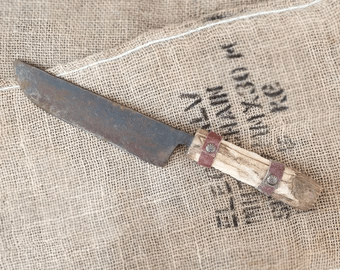
“I even got some proof I was there,” the strange man grunted eventually.  “Ya see, I was in the vanguard at the assault on Roachheart after Bloodhull fell too.  Was the first one in the room where Ka done killed ‘imself.  Stodgy bastards wouldn’t let me take his head, but I did get this!”

The “Taker of Skulls” drew a small knife from a sheath at his belt and embedded it into the bar with a loud THUNK.

“The very knife he cut ‘is throat with!” he proclaimed.

Orphelia wasn’t sure what she was supposed to be impressed with.  The knife was visibly rusting, and the blade appeared to be loosely joined to the handle with twine.  The barkeep was even more unimpressed.

“Alright, I think you’ve had plenty,” she said, glaring at the new notch in her bar.  “Time to go!”

The “Taker of Skulls” slammed his fist against the bar and roared something back, but Orphelia was only dimly aware of it.  She realized with equal parts fascination and concern that despite the knife’s innocuous appearance, she couldn’t take her eyes from it.  And the sounds around her had faded.  It was as if the substantial din of the tavern–of the argument ongoing right beside her–had become background, replaced not by different noise, but by intrusive thought:

Take it, her instinct told her.

Take it.  Take it.

Take it.

TAKE IT.

The part of her that was concerned was now, of course, alarmed, but she had no other reason not to take the knife.  So she did.

The silence and stillness fell so immediately that she felt she had been struck.  But nothing had touched her.  She pried the knife from the bar, considered it, noting that it was indeed a shoddy, unremarkable piece of work.  But then she noticed that the tavern around her had not merely stilled.  It had changed.

The barkeep was staring at her.  No.  No, everyone, the whole tavern was starting at her, but for some reason, as she glanced, panicked, back and forth, she couldn’t seem to focus on their eyes.  All of their faces were…the same.  And every single one of them was smiling, teeth bared.  At the back tables, some of them began to laugh, quiet peals of high-pitched cackling echoing across the room’s high ceiling.  And then a whisper, chime-like, consonants clicking, inches from her ear:

“Awake from your dream, child?”

She sat bolt-upright, suppressing a shiver, and whirled.  No one was there.  Rather, the tavern was there, its warmth and noise suddenly returned, and not a single person was looking at her.  No one was smiling.  At least no one was smiling like that.

Next to her, the barstool where the “Take of Skulls” had been sitting was empty.  The barkeep looked up from the cask of ale she had just finished tapping.

“You alright, sweetheart?” she asked.  “Need more wine?”

Orphelia shook her head, dazed.  Then she looked down at her hands.  She was still holding the knife, and, despite its dubious construction, it felt light and comfortable in her palm.  She glanced at the notch in the bar where the man had plunged the knife moments before.

“Excuse me, ma’am,” she said to the barkeep, gesturing to the empty stool.  “Do you know where the man who was sitting here went?”  The barkeep frowned.

“You sure you’re okay, hun?  That seat’s been empty all night.”

Orphelia stared at her, feeling a pit in her stomach.  She nodded slowly, tucked the knife into a pocket inside her dress, and slid down from her stool.  Saying nothing to the barkeep, she placed Naples’ two pieces of silver on the bar and made her way to the door as quickly as she could without sprinting.

The air was cool and wet outside.  Calming.  Traffic was light, but the street was far from empty, which was good: What happened in the tavern had left her unsettled, somehow, by both crowds and solitude.  She took a deep, nervous breath.

What was that?  Did it have to do with that weird Skull guy?  With the knife?  And where did he go?  And why did she keep the knife?  Ooh.  She had no answer she could frame in words, but even the thought of discarding the knife struck her with overpowering dread.  The voice…the knife, for some reason it was all settling, familiar, in her mind.  She didn’t like that.  She knew it wasn’t familiar.  She knew she had never seen it before.

“Orphelia, my dear!”

The voice calling from the busy end of the street was familiar too.  But it was the right kind of familiar.

“Captain al’Ver…?” she muttered, turning, dazed, toward its source.

“Orphelia, what’s the matter?” Captain al’Ver asked, drawing closer.  Behind him, she saw old Gene and Dog Boy approaching as well, along with a tall woman she had never seen before.

Orphelia didn’t reply.  She just shook her head, the air in her lungs feeling fuzzy amidst the comedown from the panic.  Gene exchanged a glance with Bleeding Wolf, who ducked quickly through the tavern door, only to reemerge a few seconds later with a shrug.

“Seems normal in there,” he said.  “What’s gotcha spooked, girl?”  Once again, Orphelia had no words.  What could she say?  How would she even begin to describe it?  Captain al’Ver frowned, looking down at her empty hands.

“Where is your stuffed bear, Orphelia?” he asked quietly.

“Left him at Brill’s,” she replied.  The world’s resolution was coming back.  She could breathe normally again.

Still, she thought, better not tell Captain al’Ver about the knife.  Better to save it for a surprise.

Oh no.

That thought had not been hers, but try as she could to contradict it, she could not.